
Anguloa clowesii
Anguloa clowesii
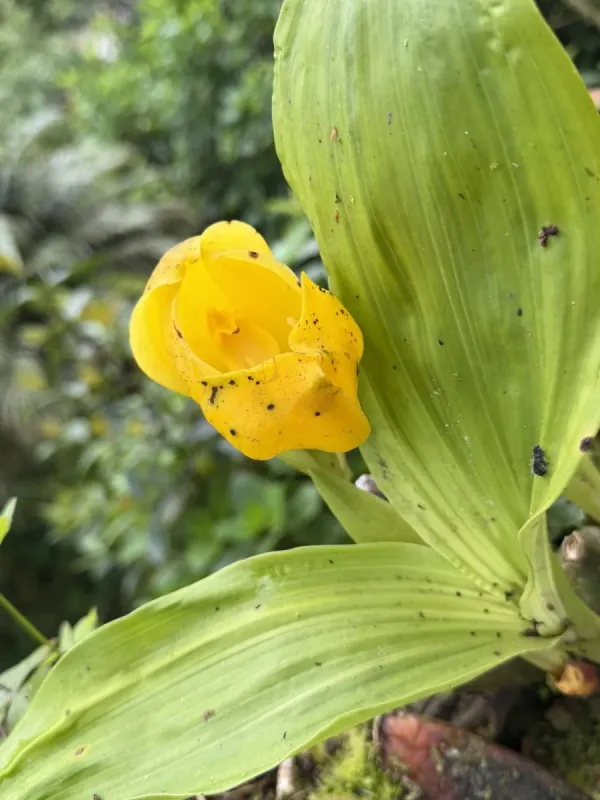
Description
Growing requirements
Anguloa clowesii, commonly known as the cradle orchid, belongs to the Orchidaceae family. It is native to the cloud forests of the Andes in Colombia and Venezuela, growing as an epiphyte at high altitudes where the climate is cool and moist.
This species requires a stable environment with significant diurnal temperature fluctuations. Daytime temperatures should ideally range between 20°C and 24°C, while nighttime drops to about 15°C are essential to trigger healthy flowering cycles.
The potting medium must be exceptionally well-draining, as the roots are highly susceptible to rot. A mixture of pine bark, charcoal, and perlite or sphagnum moss provides the necessary aeration and moisture retention for this plant.
Light levels should be bright but filtered. Intense direct sunlight will scorch the broad, pleated leaves. East-facing windows with light shading are generally the best location to ensure consistent, healthy growth throughout the year.
Watering management is crucial during the growing season. The plant should be kept consistently moist but never waterlogged. During the winter dormancy period, watering should be reduced significantly, though the pseudobulbs should not be allowed to shrivel completely.
Main diseases and pests
Spider mites are the most frequent pests, particularly in dry indoor environments. Regular misting and maintaining adequate ambient humidity levels are effective preventive measures against these tiny arachnids.
Scale insects can also infest the plant, hiding in the crevices of the pseudobulbs. These should be removed manually or treated with systemic insecticides if the infestation becomes widespread to avoid weakening the orchid.
Root rot is the most serious threat, usually caused by poor drainage or overwatering in a dense, decomposed medium. If rot is suspected, immediate repotting with fresh, sterile medium is necessary to save the plant.
Fungal leaf spot diseases can occur if water remains on the foliage for extended periods, especially in rooms with poor air circulation. Always ensure good airflow and wipe the leaves dry after accidental wetting.
Viruses are rare but can be devastating if introduced via unsterilized cutting tools. Always sanitize blades between plants to maintain a healthy collection and prevent the spread of systemic pathogens.