
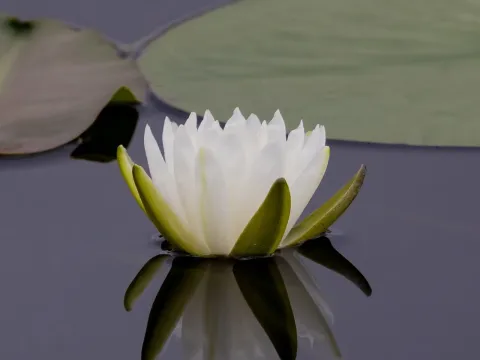
Fragrant water lily
Nymphaea odorata
The planting of the fragrant water lily Nymphaea odorata is generally performed in the spring, once the water temperature in the pond reaches at least 15–18 degrees Celsius. Early summer is also a suitable period for establishment.
What the section contains
Fragrant water lily
Rhizomes should be placed in perforated aquatic baskets filled with heavy loamy soil mixed with slow-release organic fertilizers. The growing point must be placed at the soil level to prevent rot while allowing new leaves to emerge.
Propagation is primarily achieved through rhizome division. Mature specimens should be divided every 3–4 years to ensure continuous vigor and prevent the depletion of nutrients within the container.
The depth of submersion depends on the specific variety, typically ranging from 30 to 80 cm. Careful placement ensures the plant has optimal light exposure and water pressure for growth.
After lowering the container into the pond, ensure that floating leaves have ample space to spread on the water surface without being restricted by other aquatic vegetation.
The fragrant water lily belongs to the Nymphaeaceae family and is a perennial aquatic plant native to North America, known for its pleasant fragrance.
The primary environmental requirement for Nymphaea odorata is full sun exposure. Reduced sunlight will significantly decrease flower production and cause leaves to become thin and elongated.
The soil substrate must be rich in nutrients, favoring heavy clay and organic loam. Avoid peat-based mixtures as they tend to acidify the water and float away from the planting basket.
Optimal water temperatures for active growth are between 20–25 degrees. The plant is hardy and can survive winters in the pond provided the rhizome is protected from freezing solid.
Water quality is critical; the plant thrives in stagnant or slow-moving water with a neutral pH, avoiding environments contaminated with harsh chemicals or heavy urban runoff.
The water lily beetle is a significant pest that feeds on the upper leaf surfaces, causing severe aesthetic and physiological damage to the plant.
Aphids often target emerging flower buds and young foliage, leading to stunted growth and distortion of the plant's structural integrity.
Fungal leaf spot diseases may appear in environments with poor water circulation, characterized by dark, necrotic lesions on the foliage.
Root rot is a major threat caused by stagnant conditions or the use of improper, fast-decomposing organic matter within the root zone.
Integrated pest management, including physical removal of insects and ensuring good water turnover, is recommended to keep the plants healthy without harming the ecosystem.
The fragrant water lily is primarily utilized in landscape design and as a natural bio-filter to improve water clarity in ponds and small lakes.
Maintenance and biomass management involve periodic thinning of the lily pads to ensure oxygen exchange and to prevent the surface from becoming entirely choked.
Container-grown lilies require annual or biennial maintenance to refresh the nutrient supply and prune excessive root growth, maintaining the plant's productive cycle.
Deadheading faded blooms and removing withered foliage helps divert the plant's energy toward rhizome development and preparation for the dormant season.
Proper management of the lily population ensures a balance between its aesthetic value and its ecological role within the aquatic environment, preventing the depletion of water oxygen levels.