
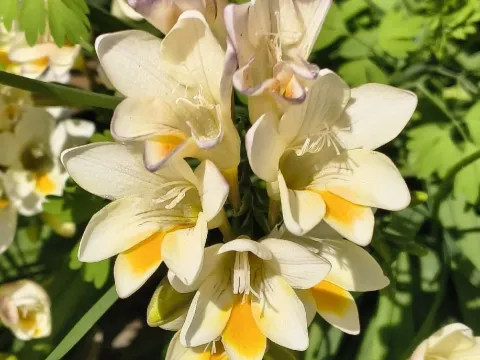
Freesia
Freesia Eckl. ex Klatt
Planting freesia outdoors should be scheduled for the spring season once the soil temperature consistently reaches 10–12 degrees Celsius. This ensures optimal conditions for initial root development and prevents chilling injury.
What the section contains


Freesia
For greenhouse cultivation, corms are planted at intervals to ensure a continuous supply of cut flowers throughout the target season. The timing is calculated based on the specific cultivar's days-to-bloom requirement, usually 90 to 120 days.
Prior to planting, corms require careful preparation, including the removal of old tunics and treatment with systemic fungicides to prevent soil-borne diseases. Proper pre-planting sanitation significantly reduces the risk of crop failure.
The planting depth typically ranges from 5 to 10 centimeters, depending on the soil texture. In lighter, more porous soils, a deeper planting depth is recommended to provide better structural support for the emerging stems.
Planting density is a critical factor for commercial production, typically ranging from 10x15 to 15x15 centimeters. Adequate spacing is essential to ensure proper air circulation and to minimize the risk of fungal outbreaks within the canopy.
Freesia is a genus in the Iridaceae family, comprising perennial herbaceous plants grown from corms. Originating from the Cape Floristic Region of South Africa, these plants are naturally adapted to mild Mediterranean climates.
The soil must be well-drained, fertile, and slightly acidic or neutral. Because freesia corms are highly susceptible to rot, avoiding waterlogged conditions is the most critical aspect of soil management during the growth cycle.
Temperature control is essential for high-quality blooms. The ideal temperature range is 15–20 degrees Celsius. Temperatures consistently above 25 degrees often cause flower degradation and can lead to the formation of blind shoots.
Regular irrigation is required throughout the growing season to maintain soil moisture without saturating the roots. Nutrient management should focus on high potassium levels during the bud formation phase to support stem strength.
Installing trellis netting is a standard horticultural practice for freesia. Providing mechanical support prevents stems from bending or lodging, which is vital for maintaining the straight stems required by the commercial flower market.
Common pests affecting freesia include aphids, thrips, and spider mites. These pests not only cause direct physical damage to leaves and petals but can also act as vectors for viral diseases that quickly spread through the greenhouse.
Fungal pathogens such as Fusarium, Sclerotinia, and Botrytis pose a significant threat to freesia health. These pathogens are most prevalent in environments with high humidity and poor ventilation, which encourages the development of rot on corms.
Viral infections, including Freesia Mosaic Virus, often lead to discolored foliage, stunted growth, and deformed flowers. Since there are no chemical cures for viral infections, rigorous pest control and rogueing of infected plants are essential.
An integrated pest management approach, utilizing both biological controls and targeted chemical treatments, is recommended for sustainable production. Constant monitoring of the crop is necessary to identify outbreaks before they reach critical levels.
Soil sterilization or the use of pasteurized substrates is highly recommended before each planting cycle to eliminate residual pathogens. This proactive measure prevents the buildup of soil-borne diseases that can ruin subsequent crops.
The harvest stage for freesia is critical to ensuring maximum vase life. Cut flowers should be gathered when the first one or two basal buds on the spike are showing color, but before they have fully opened.
Harvesting is best performed in the early morning hours when the plants are fully turgid. Using sanitized, sharp shears ensures clean cuts, which aids in quick water uptake and prevents physical damage to the plant tissues.
After harvesting, stems should be immediately transferred to a cool environment and placed in clean water with a floral preservative. Proper temperature management, ideally between 2 and 5 degrees Celsius, is crucial during storage and transport.
At the end of the season, once the foliage begins to senesce, the corms should be lifted. In regions with cold winters, this is mandatory as freesia lacks the cold hardiness required to survive frozen ground conditions.
Once harvested, the corms must be cleaned, dried for one week in a warm, ventilated area, and then stored in a cool, dry place. Proper curing prevents the corms from dehydrating or developing fungal growth during the dormancy period.