
Dierama pulcherrimum
Dierama pulcherrimum (Hook. f.) Baker
Description
Growing requirements
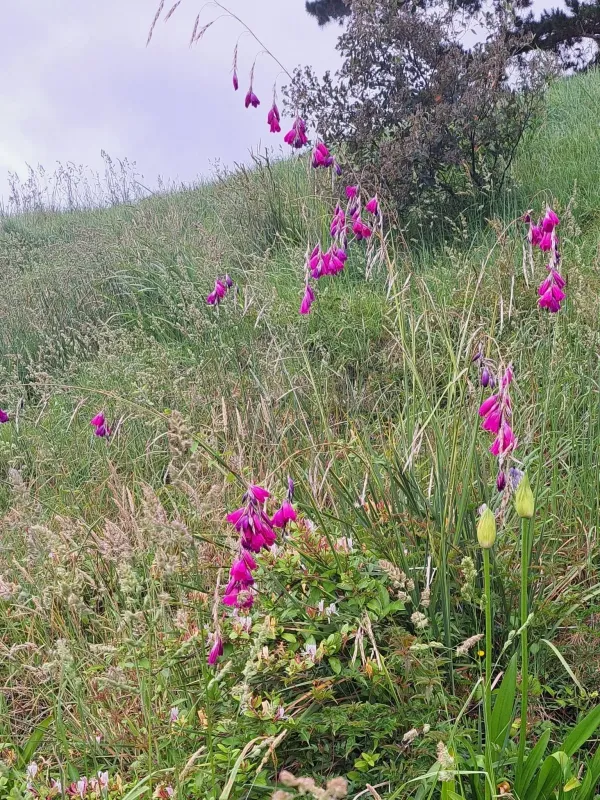
Dierama pulcherrimum, commonly known as the angel's fishing rod, is a perennial flowering plant belonging to the Iridaceae family. Native to South Africa, it is widely prized for its arching stems and bell-shaped flowers that bloom in summer.
Botanically, it features grass-like leaves and corms that store energy. The species is characterized by its dramatic, slender inflorescences that sway in the wind, which is why it is often chosen for informal, naturalistic garden designs.
In terms of climate, the plant thrives in mild environments and requires a sunny location. It is sensitive to frost and extreme cold; therefore, it is best suited for climates classified as USDA zone 8 or warmer, though it can be cultivated in containers in colder areas.
Regarding soil, Dierama pulcherrimum demands well-draining, humus-rich soil. It does not tolerate waterlogged conditions, which can lead to root rot. Regular monitoring of the moisture level is necessary, especially during the active growth phase.
The primary use of this crop is aesthetic. It is frequently incorporated into landscape design, particularly near water features or in perennial borders, where its graceful structure provides a unique visual focus.
Main diseases and pests
The most significant threats to Dierama pulcherrimum are fungal infections of the roots caused by poor drainage or excessive irrigation. Providing adequate soil aeration is the primary method for disease prevention.
Pests such as aphids and spider mites can infest the foliage, particularly in dry and hot conditions. Integrated pest management using horticultural soaps or targeted insecticides is recommended to maintain plant health throughout the season.