
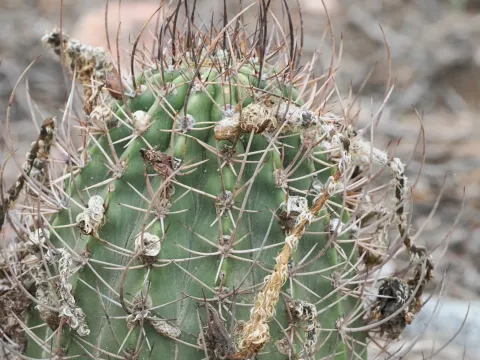
Acanthocalycium
Acanthocalycium
Propagation of Acanthocalycium is primarily achieved through seeds, which should be sown during the spring season to maximize growth potential. A sterile, well-draining substrate is mandatory to prevent fungal issues.
What the section contains


Acanthocalycium
Maintain a constant temperature between 22 and 25 degrees Celsius to ensure uniform germination. High humidity levels should be maintained initially using a greenhouse or a clear plastic cover.
Seedlings require gentle care and must be kept out of direct scorching sunlight in their first weeks. Proper ventilation is essential once germination has occurred to discourage damping-off disease.
The transition to more airy conditions should be gradual. Once the plants reach a size where they develop their characteristic spines, they are ready for individual pots.
Regular monitoring of moisture is crucial during the early stages. The soil should remain damp but never waterlogged to allow the young roots to develop properly without rotting.
Acanthocalycium is a genus of cacti belonging to the Cactaceae family, native to the high-altitude regions of Argentina. Their adaptation to mountain conditions makes them resilient but sensitive to humidity.
These cacti demand abundant sunlight to maintain their structure and promote flowering. Placing them in a south-facing position is ideal for healthy growth during the summer months.
The substrate must be highly mineral, consisting of coarse sand, gravel, and a small portion of peat. Good drainage is the most critical factor in their long-term cultivation.
During winter dormancy, plants must be kept in a cool, dry environment with temperatures around 10 degrees Celsius. Watering should be completely suspended during this phase to mimic natural cycles.
Feeding should be limited to the growing season using a balanced, low-nitrogen cactus fertilizer. Over-fertilization can result in elongated growth and reduced natural resistance to pests.
The most common threat to Acanthocalycium is root rot, triggered by overwatering or poor drainage. Once established, this condition is often fatal to the cactus.
Spider mites are prevalent pests that thrive in dry, stagnant air conditions. They are known for causing visible damage to the skin, which can become scarred and unsightly.
Mealybugs can also infest these cacti, hiding in the areoles between the ribs. Regular inspection of the plant body is necessary to catch and treat infestations early.
Fungicides and acaricides are effective tools for managing outbreaks, but manual removal of pests with alcohol-dipped swabs is often safer for localized issues.
Proper hygiene, such as disinfecting tools between pruning or moving plants, and ensuring good air circulation around the collection, significantly reduces the likelihood of these threats.