
Blechnum cordatum
Blechnum cordatum (Desv.) Hieron.
Description
Growing requirements
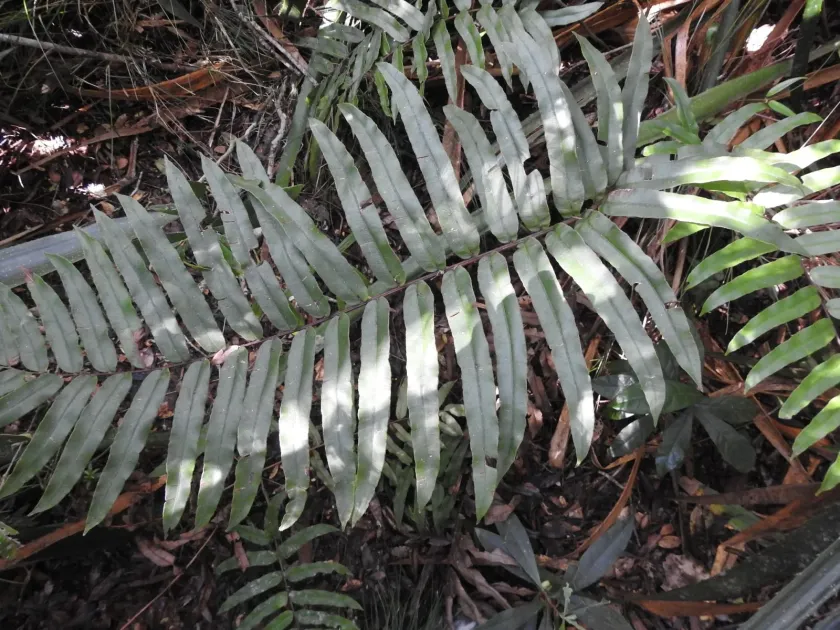
Blechnum cordatum belongs to the Blechnaceae family and is recognized for its leathery, dark green fronds that form a distinctive architectural structure.
Originating from the moist forests of South America, this fern thrives in environments characterized by consistently high humidity and diffused natural light.
Successful cultivation requires a well-drained, acidic soil medium, typically composed of peat, leaf mold, and small pieces of coniferous bark for aeration.
The plant requires stable temperatures, ideally maintained between 18 and 22 degrees Celsius, and it must be protected from cold drafts and direct solar exposure.
Regular irrigation is essential, using soft water to keep the root ball moist without allowing the potting mix to become waterlogged, which is detrimental to root health.
Main diseases and pests
The most common pests affecting Blechnum cordatum include scale insects and spider mites, which typically thrive in environments with low air circulation.
Root rot, a major threat to this species, is usually caused by overwatering or poor drainage systems that fail to let excess water escape from the pot.
Fronds can become damaged by fungal leaf spots if humidity levels are excessive without sufficient air movement, leading to decay in dense foliage areas.
Maintaining proper hygiene by removing dead or yellowing fronds is a critical step in preventing the spread of diseases and reducing pest populations.
In cases of severe infestation, targeted treatment with horticultural oil or mild insecticides is recommended, ensuring the product is safe for fern foliage.