
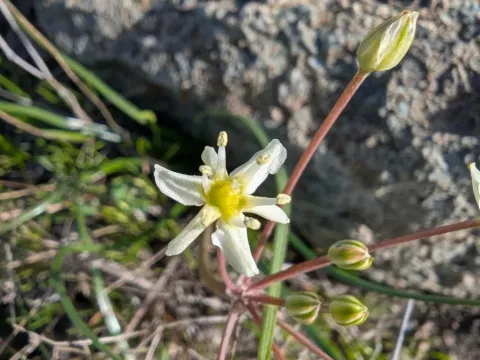
Muilla
Muilla
Planting of Muilla bulbs should occur during the autumn months, ensuring the soil remains cool enough to promote root establishment before winter.
What the section contains


Muilla
The bulbs require a well-drained substrate, so adding coarse sand or fine gravel to the planting hole is a recommended practice to avoid rot.
Spacing is essential for the health of the plants, with at least 10 to 15 centimeters between bulbs to allow for adequate airflow and nutrient access.
After planting, a light layer of organic mulch can be applied to maintain consistent soil temperatures and prevent rapid drying in early spring.
If cultivating in cold climates, it is advisable to plant in pots, which allows for easy relocation to a sheltered area during severe winter weather.
Muilla is a genus belonging to the Asparagaceae family, native primarily to the coastal regions and valleys of California and Oregon.
This crop thrives in full sun conditions, which is necessary for the development of its characteristic umbellate inflorescences.
The soil requirements are specific: the medium must be light, porous, and have a neutral pH to ensure optimal nutrient uptake and root health.
Watering management is key, requiring moisture during the active growth phase but a dry dormant period during the summer heat.
Fertilization should be kept to a minimum; a slow-release, low-nitrogen fertilizer applied at the start of the growth season is typically sufficient.
The primary concern for Muilla growers is basal rot, which is triggered by poor drainage and excessive moisture during the plant's dormant cycle.
Pests such as bulb mites can weaken the plant, causing stunted growth and yellowing of the foliage, requiring immediate soil treatment.
Thrips may occasionally cause surface damage to the flowers, affecting the overall aesthetic value of the planting during the peak bloom time.
Fungal pathogens are best controlled by maintaining clean garden practices, including the removal of dead foliage after the senescence of the plant.
Monitoring the soil moisture levels regularly is the most effective preventative strategy against the majority of physiological and pathological threats.