
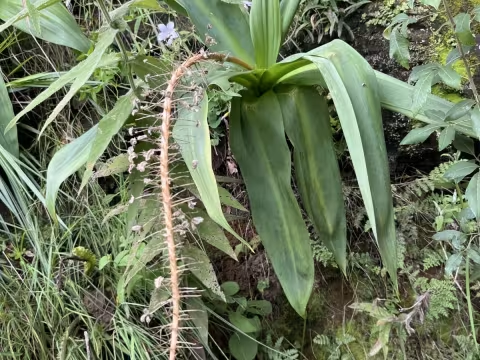
Merwilla
Merwilla Speta
Propagation of Merwilla is primarily achieved through the division of offsets or daughter bulbs that naturally develop around the parent bulb during the growing cycle.
What the section contains

Merwilla
The ideal time for division is during the plant's dormant period, typically occurring after the foliage has matured and started to senesce post-flowering.
While seed propagation is biologically possible, it is rarely utilized in commercial production due to the lengthy germination process and the time required to reach blooming size.
Bulbs should be planted in a well-aerated, porous soil mix, ensuring that the neck of the bulb remains slightly above the soil surface to prevent fungal rot.
Proper spacing is essential when planting multiple bulbs to ensure adequate airflow and to prevent competition for nutrients within the root zone.
Merwilla is a genus belonging to the Asparagaceae family, natively adapted to the climatic conditions of Southern Africa, thriving in sunny to semi-shaded environments.
This crop requires soils with excellent drainage characteristics; heavy, compacted clay soils are detrimental to the development of the bulbous root system.
Climatic requirements involve a warm, active growing season with moderate moisture, followed by a distinct dry and cool dormant period to trigger flower initiation.
Temperature management is crucial; keeping the bulbs in a cool environment during dormancy, typically around 10 to 12 degrees Celsius, ensures successful future flowering.
Fertilization should be handled with care, using a balanced, low-nitrogen liquid fertilizer applied sparingly during the peak growth phase to maintain plant health.
The most significant threats to Merwilla health include various bulb rots caused by soil-borne pathogens, usually exacerbated by overwatering and poor drainage conditions.
In indoor or greenhouse settings, spider mites represent a primary pest, often thriving in dry air environments and causing chlorotic spots on the foliage.
Fungal leaf spot diseases can occur if the humidity remains too high and the foliage is not allowed to dry off properly between watering intervals.
Root-feeding insects or larvae may occasionally target the subterranean parts of the plant, necessitating periodic inspection of the root zone and bulbs.
Control strategies should prioritize cultural methods, such as meticulous watering habits and maintaining high sanitation standards, followed by targeted chemical intervention if necessary.