
Muilla coronata
Muilla coronata
Description
Growing requirements
Muilla coronata is a perennial herbaceous plant belonging to the Asparagaceae family. This species is native to the arid desert regions of California, USA, where it has evolved specific survival mechanisms to cope with extreme environmental conditions.
As a bulbous plant, it spends the hot, dry summer months in deep dormancy under the soil surface. Vegetative growth is triggered strictly by seasonal winter rains, which initiate the development of basal leaves and a subsequent flowering stalk.
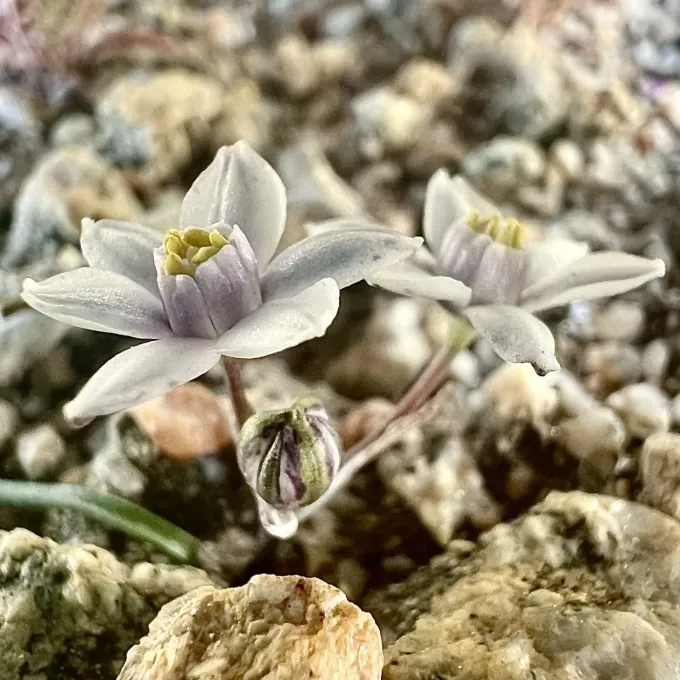
The botanical structure is defined by its small, rounded bulbs and thin, grass-like foliage. The flowers are typically arranged in an umbel, displaying the characteristic "crowned" appearance that gives the species its specific name.
Cultivation requires a substrate that mimics its natural habitat: highly porous, sandy, or rocky soil with exceptional drainage properties. Any water retention at the root zone during the active growth phase or dormancy can cause fatal issues.
Full solar exposure is mandatory for the development of healthy bulbs. Plants grown in low-light environments typically fail to bloom and may eventually succumb to nutritional depletion due to the lack of sufficient photosynthesis.
Main diseases and pests
The primary threat to Muilla coronata in garden settings is the infection by fungal pathogens, specifically those causing root and bulb rot. These pathogens thrive in conditions where the soil remains moist for prolonged periods.
Pests such as soil-dwelling nematodes pose a significant risk to the integrity of the root system. Infestations lead to reduced vigor and can stunt the plant's growth over several consecutive seasons.
Small mammals and rodents often dig up the succulent bulbs during periods of food scarcity, which can result in the complete loss of a planting site. Protective mesh or cages are sometimes used in vulnerable areas.
Mechanical damage to the bulb during soil cultivation can provide entry points for bacterial soft rot, which spreads rapidly through the tissue. Care must be taken when weeding near the plant clusters.
Effective pest and disease management is centered on maintaining the natural cycle of the plant. Ensuring the bulb is kept dry during the summer dormancy is the most effective way to prevent most biological threats.