
Common Muilla
Muilla maritima
Description
Growing requirements
Common Muilla (Muilla maritima) is a herbaceous bulbous perennial belonging to the Asparagaceae family. Native to California, this plant is well-adapted to the Mediterranean climate, specifically the dry-summer and wet-winter pattern found in its natural habitat.
The plant thrives in well-drained, sandy or gravelly soils. Due to its adaptation to harsh environments, it has a high tolerance for poor-nutrient soils, provided that the drainage remains excellent throughout the wet season to prevent bulb rot.
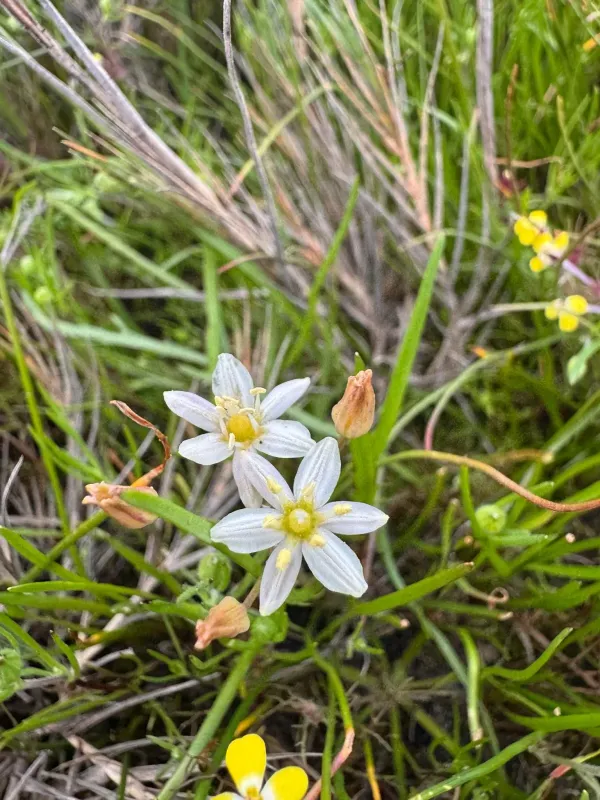
For optimal growth, Muilla requires full sun exposure. It is a heliophilous species that relies on abundant sunlight to fuel its rapid spring growth cycle, during which it produces clusters of star-shaped white or greenish-white flowers.
Climatic requirements focus on avoiding extreme frost and excessive humidity. In agricultural settings or gardens, it is essential to ensure that the site allows the bulb to enter a complete dormancy phase after the foliage dries out in late spring or early summer.
Cultural practices include occasional weeding during the active growth phase, as the plant can be sensitive to competition from invasive grasses. In container gardening, a succulent-mix substrate is ideal for mimicking the natural soil conditions of its native range.
Harvesting
The primary utility of Muilla maritima is horticultural, being used in xeriscaping and as a specimen plant in rock gardens. It is appreciated by gardeners for its delicate, umbel-like inflorescences that attract native pollinators during the early spring season.
Harvesting bulbs for propagation should be done exclusively during the summer dormancy period. After lifting, bulbs should be cleaned, inspected for damage, and stored in a cool, dry place with sufficient ventilation to ensure viability for the following planting season.