
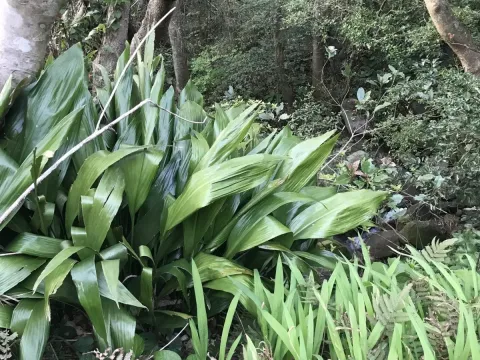
Aspidistra
Aspidistra
Aspidistra, a genus of flowering plants in the Asparagaceae family, is native to the forests of East Asia, including regions in China and Japan.
What the section contains


Aspidistra
This crop is widely recognized for its exceptional shade tolerance, making it an ideal choice for indoor environments with limited natural light exposure.
The plant thrives in moderate temperature ranges, ideally between 15 and 22 degrees Celsius, though it exhibits significant hardiness in cooler conditions.
When selecting soil for cultivation, it is important to provide a well-draining, nutrient-rich potting medium to ensure healthy root development.
Basic agronomic practices involve maintaining a consistent but moderate watering schedule, avoiding saturated soil which leads to physiological stress.
The primary economic use of Aspidistra lies in the commercial nursery trade and interior landscaping, valued for its long-lasting, dark green foliage.
Production is typically managed in greenhouse facilities where the focus is on achieving uniform plant size and high leaf density per container.
Vegetative propagation via rhizome division is the standard commercial method, as it ensures phenotypic consistency and faster plant establishment.
Yield metrics in the ornamental industry are determined by the number of saleable units produced per square meter of growing space per rotation.
Due to its durability, the plant is a staple in institutional settings, providing sustainable and low-maintenance greenery for long-term installations.
Common pests affecting the crop include spider mites and mealybugs, which are particularly problematic in environments with low relative humidity.
Root rot is the most significant disease, usually occurring as a result of overwatering and poor drainage management in the root zone.
Leaf spot conditions can develop due to environmental stress or fungal pathogens, often manifesting as necrotic lesions on the leaf blades.
Integrated pest management, including regular inspection and the use of targeted acaricides or insecticides, is essential for maintaining plant health.
Proper aeration and careful soil moisture management act as the primary preventative measures against the development of bacterial and fungal infections.