
Bailey's yucca
Yucca baileyi
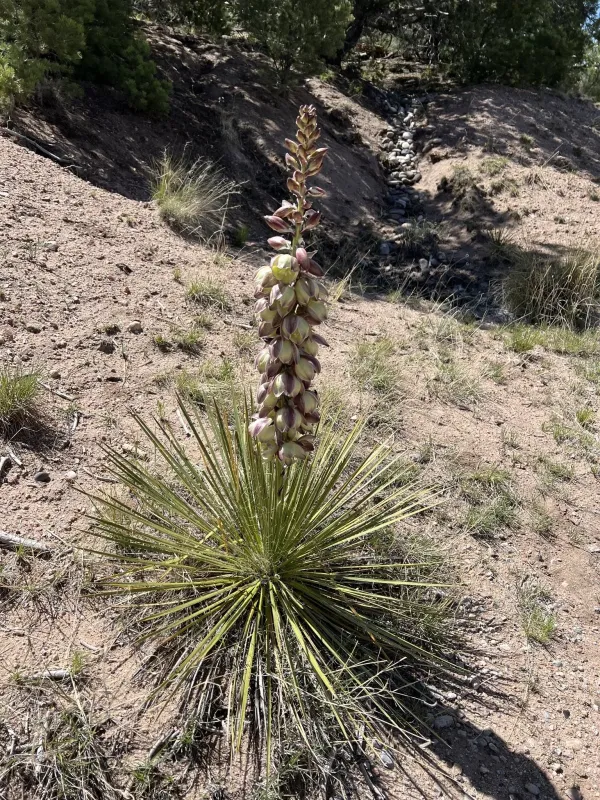
Description
Sowing dates
Sowing seeds of Yucca baileyi is best performed in the spring, ensuring the soil temperature has stabilized to support the germination process of this hardy desert species.
Seed stratification is highly recommended, as it effectively breaks dormancy and improves the overall germination rate, which can be inconsistent in fresh seeds.
A well-draining substrate composed primarily of sand, grit, and sterile potting soil is essential to ensure that the delicate roots of the seedlings do not suffer from rot.
Seeds should be placed at a depth of about 1 cm, with the soil kept barely moist during the initial stages to prevent fungal issues in the sensitive germination zone.
Once seedlings have reached a manageable size, they should be transitioned to full sun, which helps in developing the thick, waxy cuticle characteristic of mature plants.
Growing requirements
Bailey's yucca is a member of the Asparagaceae family and is native to the arid environments of the American Southwest, specifically adapted to sandy and rocky soils.
This crop requires full sun exposure throughout the day; insufficient light leads to etiolation, where the plant becomes weak, elongated, and prone to mechanical damage.
Soil requirements are strictly focused on drainage; the plant thrives in poor, rocky soils where water moves through rapidly, preventing any risk of waterlogging.
In agricultural or landscape settings, this species requires very little fertilization, as it is evolved to survive in nutrient-poor environments where slow growth is normal.
Temperature tolerance is a key feature, as the plant can withstand freezing winter temperatures provided the soil is kept dry, preventing ice crystal damage to the roots.
Main diseases and pests
The primary threat to the health of Yucca baileyi is moisture-related disease, specifically root rot, which occurs when the plant is kept in heavy or clay-heavy soils.
Spider mites are a common pest in arid, hot conditions, often targeting the foliage and causing a stippled appearance that severely degrades the plant's aesthetic value.
Mealybugs can also hide in the tight rosettes of the leaves, feeding on plant sap and requiring targeted systemic insecticide applications to fully eradicate the infestation.
Fungal leaf spots are another concern, usually triggered by poor air circulation or extended periods of high humidity which are atypical for this desert-adapted species.
Effective management includes regular inspection, maintaining proper spacing between plants to allow for airflow, and immediate isolation of any symptomatic individuals.