
Azure grape hyacinth
Muscari azureum
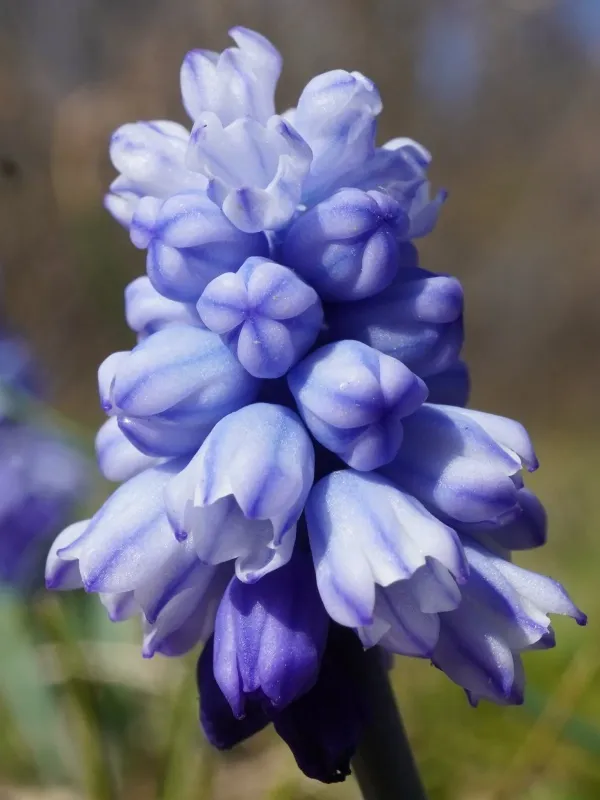
Description
Sowing dates
Planting of Azure grape hyacinth (Pseudomuscari azureum) bulbs is best performed in the autumn, specifically during September or October, to allow root establishment before the winter.
The bulbs should be planted at a depth of 6 to 8 centimeters, with a spacing of 5 to 10 centimeters between individual plants to ensure adequate nutrient access.
While seed propagation is possible, it is rarely used in practice as it takes three to four years for seedlings to reach a stage of viable flowering.
For those who choose seed propagation, seeds must be sown immediately after harvest in prepared outdoor beds to undergo natural winter stratification.
Commercial cultivation relies heavily on vegetative reproduction through offset bulbs, which preserves varietal characteristics and ensures faster maturation of the plants.
Growing requirements
This species belongs to the Asparagaceae family and functions as a spring ephemeral, requiring bright sunlight during the early stages of its vegetative cycle.
The plant thrives in well-drained, sandy or loamy soils with a neutral or slightly alkaline pH; poor drainage is the primary cause of bulb rot in cultivation.
Azure grape hyacinth is highly cold-hardy, but in regions with harsh winters, a light mulch layer of peat or dried leaves can protect the soil from deep freezing.
Adequate soil moisture is essential during the spring growth phase when the plant is actively developing leaves and its characteristic azure blue flowers.
Originating from mountainous regions in Turkey, the species is naturally adapted to rocky terrain and climates that feature a distinct dry summer dormancy period.
Main diseases and pests
The most significant pathological threat is the mosaic virus, which causes stunted growth and leaf distortion, often transmitted by common aphids in the garden.
Fungal infections such as grey mold or Penicillium rot are prevalent when bulbs are stored in environments with poor air circulation or excessive ambient humidity.
Pests like the onion fly represent a serious risk, as the larvae consume the basal plate of the bulb, resulting in rapid collapse and death of the plant.
Slugs and snails can cause damage to foliage during wet seasons, stripping the plant of its aesthetic value and reducing its overall photosynthetic capability.
Proactive prevention involves disinfecting bulbs before planting and maintaining a clean growing area to minimize the spread of insect vectors and spores.
Harvesting
The harvest and division of bulbs are carried out after the foliage has fully yellowed and withered, indicating the end of the growth cycle and total dormancy.
Upon extraction, bulbs must be dried thoroughly in a shaded, well-ventilated area, cleaned of soil and loose tunic layers, and sorted according to their size.
Storage requires a cool, dry place with sufficient airflow to prevent the bulbs from dehydrating prematurely or developing decay-causing fungal pathogens.
Regular division of bulb clumps every three to four years is highly recommended to prevent overcrowding, which typically leads to smaller blooms and weaker plants.
- Best time for dividing clumps is during the dormant summer period.
- Always store bulbs in perforated containers to maintain constant ventilation.
- Discard any soft or damaged bulbs immediately to protect the healthy stock from cross-contamination.