
Aspidistra vietnamensis
Aspidistra vietnamensis (Aver. & Tillich) Aver. & Tillich
Description
Growing requirements
Aspidistra vietnamensis is an evergreen perennial plant belonging to the Asparagaceae family. Native to the forests of Vietnam, this species thrives in understory conditions, where it is protected from direct sunlight by the forest canopy.
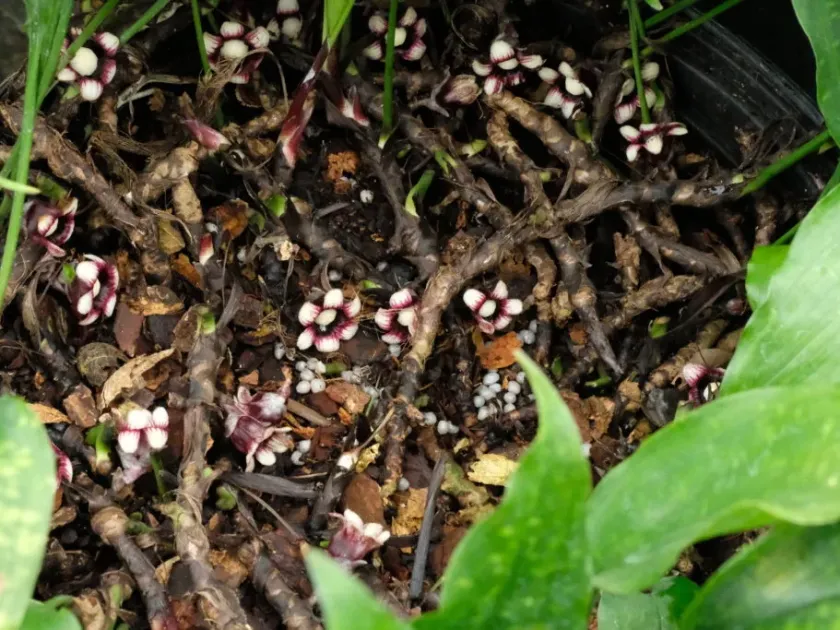
Botanically, it is characterized by creeping rhizomes and large, leathery, lance-shaped leaves. One of its most distinctive features is its unique flowering habit, where the flowers appear directly at the base of the plant, often partially buried in the leaf litter.
The plant demands a stable environment with temperatures between 18°C and 24°C. It is highly sensitive to bright light, which can bleach the foliage or cause necrosis, making it ideal for shaded locations where other plants fail to thrive.
Soil requirements focus on high fertility and excellent drainage capacity. A potting mix consisting of compost, peat, and coarse sand provides the ideal environment for root development while preventing waterlogging issues.
Cultural practices include moderate watering and high humidity levels. While it is a robust plant, it requires consistent care to maintain its lush appearance, including the periodic removal of dead leaves and dust control on the broad foliage surface.
Main diseases and pests
Pests such as spider mites and scale insects are the primary concerns for Aspidistra vietnamensis, especially in indoor environments with dry air. Monitoring for signs of infestation and cleaning leaves regularly are effective preventative measures.
Root rot caused by overwatering is a critical threat to this species. To mitigate this risk, it is essential to allow the top layer of soil to dry out between watering sessions and to ensure that the pot has sufficient drainage holes.