
Cast-iron plant
Aspidistra elatior Blume
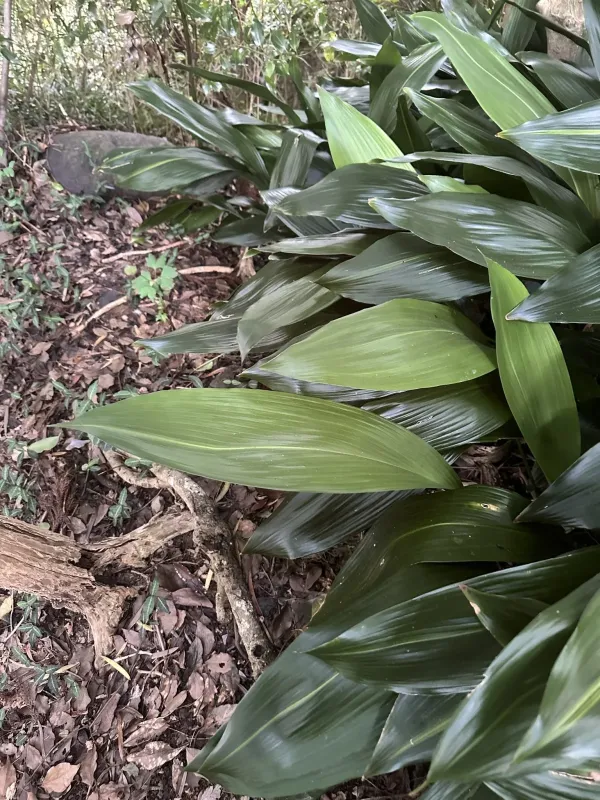
Description
Growing requirements
Aspidistra elatior, commonly known as the cast-iron plant, belongs to the Asparagaceae family. Originating from the forests of Eastern Asia, particularly Japan and China, this plant is renowned for its extreme hardiness and ability to thrive in challenging environments.
The plant features long, lance-shaped, dark green leaves that grow from a thick, creeping rhizome. It is a slow-growing evergreen perennial that rarely produces flowers under indoor conditions, and its blooms are typically situated at soil level.
Regarding light, it is a quintessential shade-tolerant species. It performs best in low to moderate light conditions, avoiding direct sunlight which causes leaf scorching. This characteristic makes it an ideal choice for interior landscaping in rooms with limited natural light.
Soil requirements focus on well-draining, humus-rich mixtures. The plant is not particularly fussy about soil pH, but it demands proper aeration to prevent root rot. It is recommended to use a standard potting mix supplemented with perlite or coarse sand for better drainage.
Economically, Aspidistra elatior is a staple in the ornamental plant trade. Its common name, "cast-iron plant," refers to its durability in conditions such as poor lighting, erratic watering, and fluctuating temperatures that would kill most other decorative species.
Main diseases and pests
The most common pests affecting the cast-iron plant are spider mites and scale insects. Spider mites thrive in dry conditions, while scale insects can appear as brown bumps on the undersides of leaves, sucking the plant's sap and weakening it.
Root rot is the most significant disease threat, typically caused by overwatering. If the roots remain constantly waterlogged, they lose their ability to absorb nutrients, leading to yellowing leaves and, eventually, complete plant collapse.
Management of pest outbreaks involves regular leaf inspection and the use of insecticidal soaps or horticultural oils. Early detection is key, especially checking the undersides of the leaves where these pests tend to congregate in hidden colonies.
Prevention of fungal diseases is achieved through careful irrigation management. It is best to allow the top half of the soil to dry out completely before watering again, ensuring that the pot has adequate drainage holes to prevent standing water.
Maintaining cleanliness of the foliage is essential. Wiping the leaves with a damp cloth not only keeps the plant looking aesthetically pleasing but also prevents dust buildup, which can interfere with photosynthesis and mask the presence of small insect infestations.