
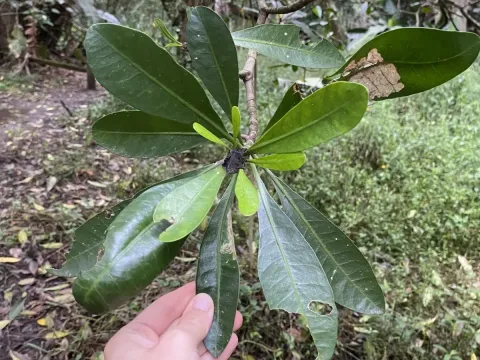
Voacanga
Voacanga
Voacanga, particularly the widely studied species Voacanga africana, is primarily propagated through seeds in nursery environments. The seeds require pre-treatment, including soaking, to improve germination rates, as they possess a hard seed coat.
What the section contains


Voacanga
Sowing is performed in a well-draining substrate consisting of a mixture of sand and compost. The optimal sowing depth is 1-2 centimeters, which provides protection against drying out while allowing sufficient light for successful germination.
The germination process typically takes three to six weeks at a constant ambient temperature of about 25-28 degrees Celsius. Maintaining stable soil moisture without waterlogging is crucial to prevent the decay of young sprouts.
Once the first pair of true leaves emerges, seedlings are pricked out into individual containers. This allows the root system to develop more vigorously before transplanting to a permanent location in the open field.
Transplanting to plantations is carried out at the beginning of the rainy season, which provides young plants with the necessary moisture reserves to adapt and actively build vegetative mass during the first months after planting.
Voacanga belongs to the Apocynaceae family and is a typical heat-loving tropical crop. It has high temperature requirements, preferring levels between 22 and 30 degrees Celsius throughout the year.
The plant thrives on deep, loose, and fertile soils with a neutral or slightly acidic pH. A key requirement is the absence of high groundwater levels, as the crop is extremely sensitive to waterlogged root systems.
Intensive sunlight is required for normal growth, although light shading is acceptable during early stages to protect plants from direct midday sun during drought periods.
In its natural habitat, the range covers tropical regions of Africa, where it grows in forest areas and open clearings with sufficient rainfall. In cultivation, regular weed control in the tree root zone is necessary.
Agricultural practices include applying organic fertilizers at the beginning of the growing season, which stimulates shoot growth and increases the concentration of alkaloids in the plant's bark and seeds.
The main commercial value lies in the bark of the trunk and roots, as well as the plant's seeds, which accumulate valuable indole alkaloids. Harvesting the bark requires caution to ensure the tree survives.
Industrial exploitation of Voacanga plantations focuses on supplying raw materials to the pharmaceutical industry. Yield depends on the age of the tree, as the accumulation of active substances is directly linked to the plant's maturity phase.
Seeds are harvested after the fruits are fully mature, which is indicated by their characteristic color. The fruits appear as paired follicles that require post-harvest ripening and thorough cleaning from the pericarp.
When following proper planting schemes (usually 3x3 or 4x4 meters), a plantation begins to yield stable revenue by the 3rd to 5th year. Harvesting raw materials is carried out selectively, respecting the plant's regeneration cycles.
Effective plantation management requires implementing monitoring systems for alkaloid content in tissues, which allows for determining optimal harvesting times to achieve maximum market value for the final product.
The crop is susceptible to various pests typical of tropical forests, including scale insects and mealybugs, which sap the vitality of young shoots. Regular inspections help contain infestations at early stages.
In high-humidity conditions, plants can be affected by fungal diseases leading to leaf spots or root rot. Prevention involves maintaining cleanliness and good aeration between plants.
Pest management at an industrial scale involves using environmentally friendly biopreparations, as the accumulation of chemical pesticides in pharmaceutical-grade raw materials is strictly prohibited.
Nematodes pose a serious threat to the Voacanga root system, especially when grown in sandy soils. Including cover crops in the rotation helps reduce the population of these pests in the soil layer.
Young trees can also be damaged by small rodents, so protecting the lower part of the trunk with mesh or using repellents is a mandatory part of agricultural practice during the first years of growth.
Bark harvesting is conducted during the dry season, as high humidity complicates raw material drying and increases the risk of mold. The bark is carefully stripped in strips, leaving sections to allow for tree recovery.
After stripping, the bark must be immediately dried in ventilated rooms or specialized dryers at a temperature not exceeding 45 degrees Celsius to preserve the biological activity of the substances.
Fruits are harvested by hand as they mature, ensuring high-quality seeds. It is important to avoid over-ripening, which can cause fruits to split, leading to significant harvest losses.
After harvesting, seeds are separated from the pulp, washed, and dried in the sun or shade until reaching a moisture level safe for long-term storage. Proper storage ensures the preservation of the alkaloid composition.
The entire raw material procurement process requires strict adherence to sanitary norms and quality standards established in the pharmaceutical sector to prevent the degradation of valuable plant-based components.