
Woolly milkweed
Asclepias lanuginosa
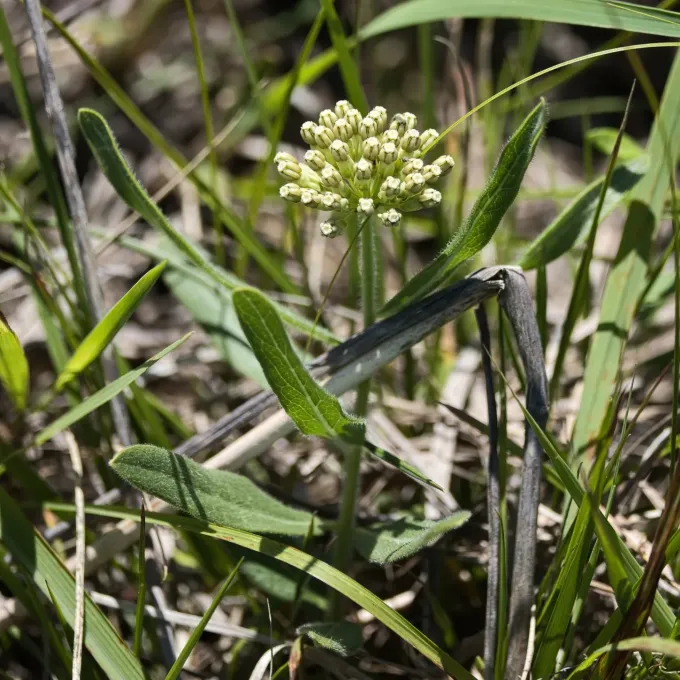
Description
Sowing dates
Sowing of woolly milkweed seeds should be carried out in early spring, as soon as the soil warms up to 8–10°C at the seeding depth. Late autumn sowing is also possible, as it promotes natural seed stratification, which is essential for improving germination rates.
The sowing depth is 2–3 centimeters, as small seeds require firm contact with the soil to absorb sufficient moisture. Optimal plant density varies depending on cultivation goals but generally ranges from 150,000 to 200,000 plants per hectare.
To ensure uniform seed distribution, it is recommended to use modern pneumatic seed drills. Post-sowing, it is crucial to perform soil compaction to prevent the topsoil from drying out and to ensure uniform emergence under variable spring weather conditions.
Initial growth of milkweed is often slow, making timely weed control during the early vegetation phase essential. During the first two months after emergence, the crop is highly sensitive to competition from fast-growing weeds.
When using transplanting methods, one can achieve faster canopy closure. Planting seedlings into the field should be done after the risk of night frosts has passed, allowing the crop to effectively utilize the entire growing season for biomass production.
Growing requirements
Woolly milkweed (Asclepias lanuginosa) is a perennial herbaceous plant belonging to the Apocynaceae family. This crop is characterized by high adaptability to arid conditions and the ability to develop a powerful root system that reaches deep into the soil profile.
In its natural habitat, the plant grows in the prairies of North America, preferring well-drained, sandy, or sandy-loam soils. It demonstrates significant resistance to water deficit, making it a promising candidate for cultivation in regions with a temperate continental climate and limited precipitation.
For optimal development, milkweed requires well-lit sites with a neutral to slightly alkaline soil pH. The plant does not tolerate waterlogging in the root zone, so when selecting fields for planting, one should avoid low-lying areas with high groundwater levels.
Optimal temperatures for active growth range from 20 to 28°C. During the winter, the plant can withstand significant sub-zero temperatures by entering a state of deep dormancy, which allows it to be cultivated as a perennial in regions with challenging agricultural environments.
Beyond climatic factors, the plant requires minimal care during the second and third years after sowing. It generally does not require intensive mineral fertilization, as it can effectively extract nutrients from deep soil horizons, contributing to its status as a low-input crop.
Main diseases and pests
One of the main challenges in growing woolly milkweed is aphid infestation, which not only damages young shoots but also transmits dangerous viral diseases. Pest population monitoring should be carried out weekly from the moment the first leaves appear.
Among fungal diseases, various leaf spots and root rots are the most significant threats, typically arising from poor agronomic practices. Excessive soil moisture combined with high air humidity promotes the rapid spread of infections that require fungicide application.
Pests such as weevils and certain Lepidoptera larvae can damage the plant's reproductive organs, reducing potential seed yield. Preventive insecticide treatments are recommended during the active growth phase before the crop begins to bloom.
To minimize infection risks, it is necessary to strictly adhere to crop rotation and avoid returning the crop to the same field for at least 4–5 years. This practice breaks the life cycle of specific pathogens that persist in soil residues.
Phytosanitary control of seed material is a crucial protection element. Using certified and treated seeds significantly reduces the probability of disease outbreaks during the early stages of crop development.