
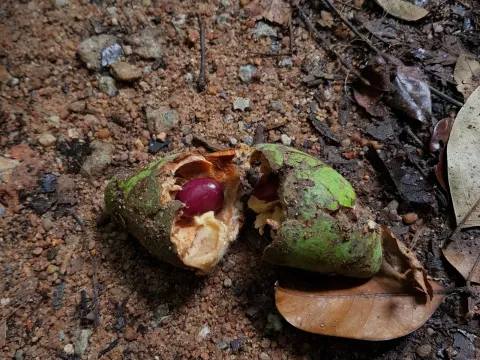
Willughbeia
Willughbeia
Willughbeia is a genus of woody lianas belonging to the Apocynaceae family, native to the tropical rainforests of Southeast Asia, including regions like Borneo and the Malay Peninsula.
What the section contains

Willughbeia
The plant thrives in humid, hot tropical climates where temperatures remain consistently high throughout the year, as it is highly sensitive to cold stress.
Ideal cultivation sites are characterized by nutrient-rich, well-draining forest soils that support vigorous growth of the vine's extensive stem system.
As a climbing plant, Willughbeia requires structural support to reach the canopy layer, which is essential for maximizing photosynthesis and subsequent fruit production.
Effective management requires maintaining the surrounding forest ecosystem, as the species relies on specific microclimatic conditions provided by the rainforest canopy.
The primary agricultural interest in Willughbeia lies in its edible fruits, which are highly regarded for their flavor profile and are widely consumed by local populations.
Fruits are typically harvested from the wild, where they serve as a seasonal source of nutrition and income for local indigenous communities in Southeast Asia.
Historically, the latex harvested from the bark of these lianas was utilized for rubber production, though it is now secondary to the fruit's economic value.
Yield estimation is difficult due to the non-domesticated nature of the genus, with production cycles heavily influenced by rainfall patterns and local pollinator activity.
Future potential for domestic cultivation depends on selecting high-yield varieties and developing sustainable agroforestry practices for tropical regions.
Deforestation and habitat loss pose the most significant threat to the survival of Willughbeia species, leading to a decline in natural population densities.
The plant's natural latex and chemical composition provide a degree of defense against generalist herbivores, minimizing damage from common tropical insects.
Fungal pathogens associated with high moisture environments represent the most frequent disease threat, especially in areas with poor ventilation within the canopy.
Competition with invasive plant species and the lack of suitable support trees in disturbed areas can severely impede the growth of young seedlings.
Conservation efforts are needed to protect the genetic diversity of the genus, ensuring that it remains a viable resource for future sustainable development.