
Stapelianthus decaryi
Stapelianthus decaryi
Description
Growing requirements
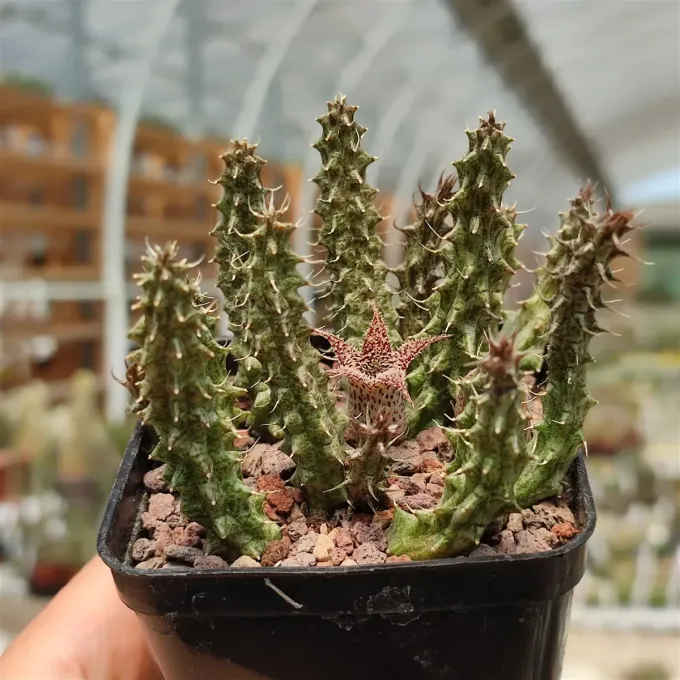
Stapelianthus decaryi is a unique succulent plant belonging to the Apocynaceae family. In its natural habitat, this species is endemic to the island of Madagascar, where it thrives in arid climates on rocky, well-draining soils.
Botanically, the plant is a low-growing shrub composed of ribbed, cylindrical stems that resemble cacti in appearance, although they are not closely related. The stem surface is often covered with small tubercles and displays a distinct gray-green coloration.
For successful cultivation, providing adequate lighting is critical. Stapelianthus prefers bright, indirect sunlight, as direct harsh sun may cause burns, while insufficient light leads to etiolation and the deformation of the stems.
Soil requirements involve using a specialized substrate for succulents and cacti. The potting mix must possess excellent drainage properties, be loose, and highly aerated to prevent moisture retention and root rot.
Watering should be strictly moderate, allowing the soil to dry out completely between sessions. During the winter, the plant enters a dormant phase; therefore, irrigation should be significantly reduced while keeping the ambient temperature cool.
Main diseases and pests
The primary threat to Stapelianthus decaryi is substrate waterlogging, which inevitably leads to root and stem rot. These fungal pathogens spread rapidly and can destroy the entire plant structure in a matter of days if ignored.
Among pests, mealybugs and spider mites are the most common concerns. Mealybugs inhabit the crevices of the stems, sucking the sap and leaving a white, waxy residue, which significantly weakens the plant's vigor.
Spider mites often attack the plant in conditions characterized by excessively dry air and high temperatures. Their presence is usually identified by the appearance of fine webbing and a yellowed, sickly appearance of the stem epidermis.
To combat these pests, the application of systemic insecticides and acaricides is recommended, strictly following the manufacturer's dosage instructions. Regular monitoring and maintaining appropriate humidity levels serve as effective prevention.
It is crucial to remember that any physical damage to the stem creates an entry point for infections. Therefore, always use disinfected tools during propagation or repotting and treat any cuts with crushed charcoal to ensure rapid healing.