
Stapelianthus madagascariensis
Stapelianthus madagascariensis
Description
Growing requirements
Stapelianthus madagascariensis is a distinct succulent species belonging to the Apocynaceae family. Native to the arid regions of Madagascar, it has evolved unique morphological traits to survive in nutrient-poor and water-scarce environments.
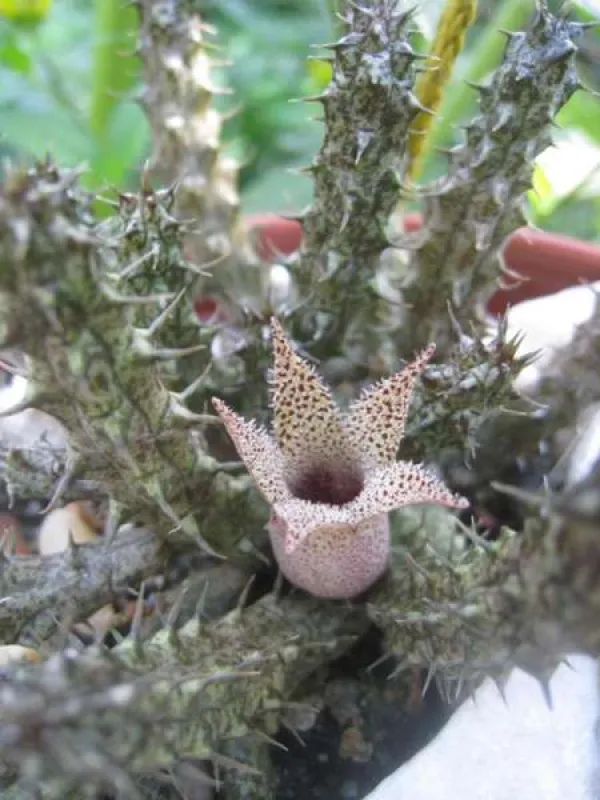
Botanically, the plant is characterized by its prostrate, cylindrical, and tuberculate stems. These stems are highly efficient at storing water, allowing the plant to remain dormant and healthy during periods of prolonged drought in its natural habitat.
To cultivate this species effectively, growers must mimic its native environment by providing high light intensity. While the plant prefers bright indirect light, it can tolerate some morning direct sun, which enhances its structural coloration and health.
The choice of substrate is paramount; a professional succulent mix must be used. It should consist of gritty materials like pumice, lava rock, and coarse sand, ensuring that water drains almost instantaneously to prevent physiological stress.
Temperature management is crucial: the plant thrives in warm conditions during the growing season (spring through autumn). However, during winter dormancy, temperatures should be lowered to initiate the resting phase and prevent etiolation.
Main diseases and pests
Root rot caused by overwatering remains the primary threat to the health of Stapelianthus madagascariensis. Once the roots are compromised, the infection spreads rapidly into the succulent stems, which often leads to the death of the plant.
Mealybugs are the most common pests found on this species. They frequently colonize the crevices between the tubercles, making them difficult to detect and eradicate without the use of systemic contact insecticides.
Poor ventilation can lead to an outbreak of spider mites, especially in dry environments. These mites cause stippling on the stem epidermis, which significantly reduces the plant's aesthetic value and photosynthetic capacity.
Fungal pathogens such as Botrytis can emerge in high-humidity conditions, especially if the air is stagnant. Proper airflow is an essential preventive measure to ensure the stems remain dry and healthy.
Effective management strategies require a combination of regular visual inspections, strict irrigation control, and the judicious use of pesticides to maintain a healthy and vigorous specimen.