
Rauvolfia salicifolia
Rauvolfia salicifolia
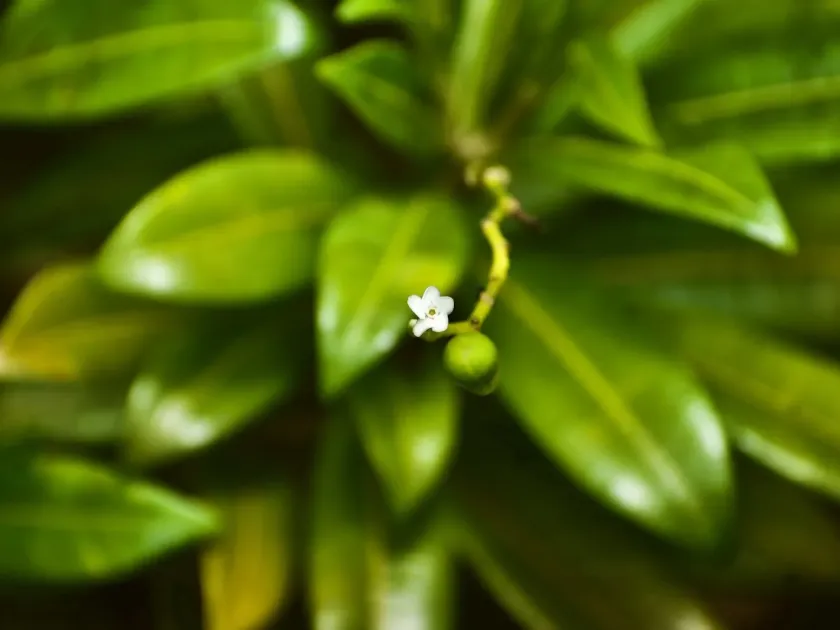
Description
Sowing dates
Rauvolfia salicifolia is a perennial evergreen shrub that requires specific propagation techniques, typically involving seed germination or vegetative cuttings.
Sowing should ideally occur in early spring within controlled environments to maintain a constant soil temperature between 22 and 25 degrees Celsius.
To improve germination rates, seeds often require a period of stratification before being placed into high-quality growing substrates.
Once seedlings develop their second or third set of true leaves, they are transplanted into individual containers to ensure robust root system development.
Transplanting into the primary production area must be delayed until all risks of low-temperature stress are completely eliminated.
Growing requirements
Belonging to the Apocynaceae family, this species thrives in tropical climates similar to its native African habitats, necessitating consistent warmth.
Successful cultivation requires fertile, well-draining soils with a slightly acidic pH and high levels of organic matter for optimal nutrient availability.
The plant demonstrates a high demand for ambient humidity, making the use of misting or irrigation systems essential for healthy foliage growth.
Partial shade is recommended as the plant is susceptible to leaf scorching if exposed to intense, direct tropical sunlight for extended periods.
Balanced fertilization programs, prioritizing nitrogen in early stages and potassium for root development, are critical for maximizing phytochemical yield.
Main diseases and pests
Fungal diseases related to excessive moisture and poor soil aeration constitute the primary threats to the health of these plantations.
Pests such as spider mites and mealybugs frequently attack the plants, particularly when air humidity levels in greenhouses are not properly managed.
Root rot is a major risk that can cause the rapid decline of entire crop batches if irrigation protocols and drainage systems are not strictly followed.
Integrated pest management, combining preventative sanitation and the use of targeted biological controls, is essential for sustainable production.
- Monitoring for pest infestations
- Ensuring proper greenhouse airflow
- Maintaining soil drainage systems
Harvesting
The economic value of Rauvolfia salicifolia is derived from its root system, which is harvested for the extraction of potent pharmaceutical alkaloids.
Harvesting is typically scheduled for the third or fourth year of growth to ensure the plants have reached sufficient maturity for alkaloid accumulation.
Mechanical harvesting methods are employed to extract the roots, followed by immediate cleaning to remove soil and debris before processing.
The harvested material must be dried in professional dehydrators at temperatures not exceeding 60 degrees Celsius to preserve the chemical integrity.
Once dried, the product is stored in climate-controlled environments protected from light and humidity to maintain its pharmacological potency.