
Pachypodium lamerei
Pachypodium lamerei Drake
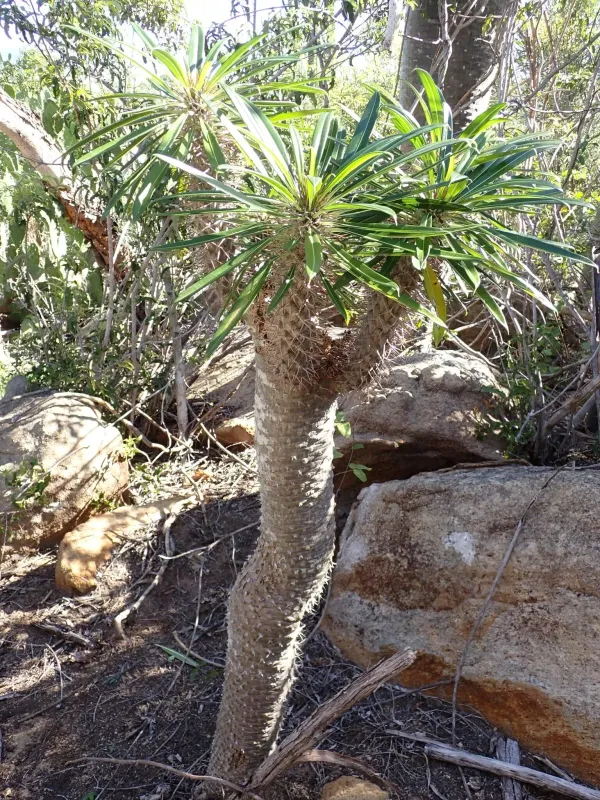
Description
Growing requirements
Pachypodium lamerei, commonly known as the Madagascar palm, belongs to the Apocynaceae family. Despite its common name, it is not a true palm but a succulent shrub native to the arid regions of Madagascar.
The plant thrives in full sunlight. When kept indoors, it requires a south-facing window to receive enough photons to maintain its structural integrity and avoid becoming leggy or weak.
The substrate must be highly porous and fast-draining. A typical agricultural mixture includes loam, leaf mold, and coarse sand or pumice in a 1:1:1 ratio, ensuring that excess water leaves the container quickly.
Irrigation practices must follow the plant's metabolic cycle. During the growing season, water only after the substrate has completely dried out. During the dormant winter phase, water must be restricted to prevent root rot.
Climate control is essential for this species. It prefers temperatures between 22°C and 28°C during the day. It is highly sensitive to cold, and temperatures falling below 15°C can cause severe physiological stress and leaf drop.
Main diseases and pests
Spider mites are the most common pests that thrive in dry, indoor environments. They feed on the sap of the succulent leaves, causing stippling and eventual leaf loss if left untreated.
Mealybugs are another frequent threat, often congregating in the crown of the plant where they are hard to reach. They are identified by the white, cottony masses they produce on the stems and leaves.
Root rot, caused by fungal pathogens in waterlogged soil, is the most common cause of plant mortality. Once the base of the stem turns soft and discolored, the damage is often irreversible.
Fungal spot diseases can occur due to poor ventilation and high humidity. Proper airflow is necessary to ensure the surface of the plant remains dry and resistant to infections.
Management involves using systemic pesticides for pest control and maintaining a strict, dry irrigation cycle. Routine monitoring of the plant’s foliage and stem firmness is the best preventative strategy.