
Duvalia sulcata
Duvalia sulcata
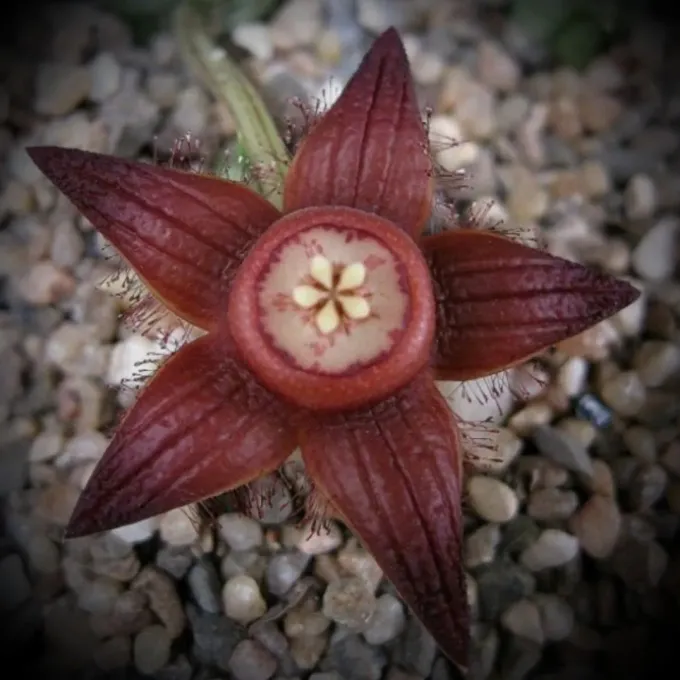
Description
Growing requirements
Duvalia sulcata is a specialized succulent plant belonging to the Apocynaceae family. It is recognized for its unique, deeply ribbed, fleshy stems that store water to survive in harsh, arid environments.
The native habitat of this plant includes the arid landscapes of the Arabian Peninsula and parts of North Africa. It thrives in regions characterized by high heat and minimal annual rainfall, often growing among rocks.
Cultivation requires a bright location with filtered light. While the plant loves warmth, excessive direct midday sun in artificial environments can stress the plant, leading to discoloration or sunburn on the stems.
The substrate must be highly inorganic and porous. A typical mix includes cactus soil, pumice, and coarse sand in a 1:1:1 ratio, ensuring that the water drains away from the roots immediately after irrigation.
Managing the watering schedule is essential. During the active growth season, water should be applied only when the substrate has fully dried out. In the winter dormancy period, watering should be reduced to a bare minimum.
Main diseases and pests
The most significant threat to Duvalia sulcata is root rot caused by stagnant moisture. Once the roots are compromised, the rot spreads quickly to the succulent stems, often resulting in complete plant loss.
Mealybugs are the most prevalent pests that affect this species. They hide in the deep grooves of the stems, making them difficult to detect until they have established a significant colony.
Spider mites can also be problematic if the humidity levels drop significantly. These tiny pests pierce the epidermis, leading to unsightly scars and reduced vitality of the succulent.
Regular sanitation of the growing area and quarantine of new plants are crucial strategies to keep a collection free from pests and infections.
Chemical control involving systemic insecticides or specialized fungicides should be performed strictly according to manufacturer guidelines to avoid damaging the delicate succulent tissues.