
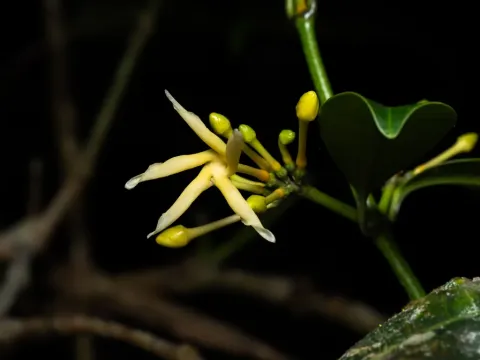
Chilocarpus
Chilocarpus
Chilocarpus is a genus of woody vines belonging to the Apocynaceae family. These plants are primarily native to the tropical rainforests of Southeast Asia, spanning across regions such as Malaysia, Indonesia, and the Philippines, where they occupy various forest strata.
What the section contains
Chilocarpus
The culture thrives in tropical environments characterized by high humidity levels and consistent year-round temperatures. It requires fertile, well-drained soil rich in organic matter to support its vigorous vegetative growth and structural development as a climbing vine.
Botanical identification of the genus relies on its characteristic opposite leaves and the presence of latex-containing sap in the stems. The flowers are typically small and form dense inflorescences, which play a crucial role in the plant's reproductive strategy within its native biome.
In terms of growth requirements, Chilocarpus needs structural support to reach adequate sunlight, as it is naturally adapted to climb surrounding forest vegetation. Careful management of soil moisture is essential to prevent root rot while maintaining the humidity necessary for healthy growth.
While not a major commercial crop, Chilocarpus is of significant interest for its phytochemical diversity. The presence of specific alkaloids in its tissues makes it a subject of ongoing research for potential pharmacological applications and the development of new bioactive compounds.