
Ceropegia longifolia
Ceropegia longifolia
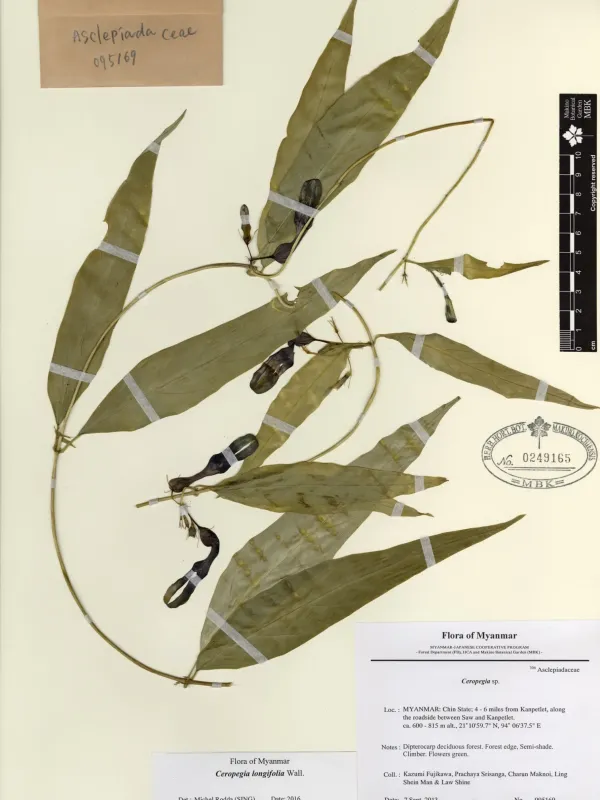
Description
Growing requirements
Ceropegia longifolia is a perennial succulent species belonging to the Apocynaceae family. It is recognized for its slender, trailing growth habit and unique, structurally complex flowers that serve as an attractive feature for botanical enthusiasts.
Originating from the tropical and subtropical regions of Asia, the plant thrives in habitats that provide consistent warmth and excellent drainage. It is well-adapted to environments where water availability is periodic rather than constant.
The cultural requirements demand bright, indirect sunlight to maintain the integrity of the foliage and encourage flowering. Direct exposure to intense midday sun must be mitigated to avoid chlorosis or leaf scorch on the delicate stems.
The ideal soil medium should be highly porous, typically a mix designed for cacti or succulents. Incorporating coarse sand, perlite, or pumice into the substrate is essential to ensure aeration and rapid drainage, preventing the roots from suffocating.
Temperature management is crucial: the plant prefers a range between 20°C and 25°C during the active growing phase. A cooler resting period during the winter months, around 15°C, is highly recommended to mimic natural seasonal cycles.
Main diseases and pests
The most common pests affecting Ceropegia longifolia are mealybugs, which tend to accumulate in the axils of the leaves. Manual removal or the application of appropriate systemic insecticides can effectively control these infestations.
Root rot remains the primary threat to the vitality of the plant. It is almost exclusively caused by overwatering or using a medium that retains excessive moisture, which leads to the collapse of the root system and eventual plant death.
Spider mites represent a secondary threat, particularly when the ambient humidity is low. These pests can cause significant damage to the epidermis of the stems, making the plant look withered and unhealthy.
Fungal infections, often manifested as dark necrotic spots on the stems, can occur if the foliage is kept wet in cool, stagnant air. Improving ventilation and maintaining dry stems are effective preventative strategies.
Nutrient imbalances, particularly excessive nitrogen, can lead to soft, etiolated growth that is prone to physical damage and disease. Balanced, low-nitrogen fertilizers applied during the growing season help sustain a robust plant structure.