
Ceropegia vignaldiana
Ceropegia vignaldiana
Description
Growing requirements
Ceropegia vignaldiana is a fascinating succulent vine belonging to the Apocynaceae family. Originating from the African continent, it has adapted to life in well-drained, rocky environments where it utilizes its vining habit to reach better light conditions.
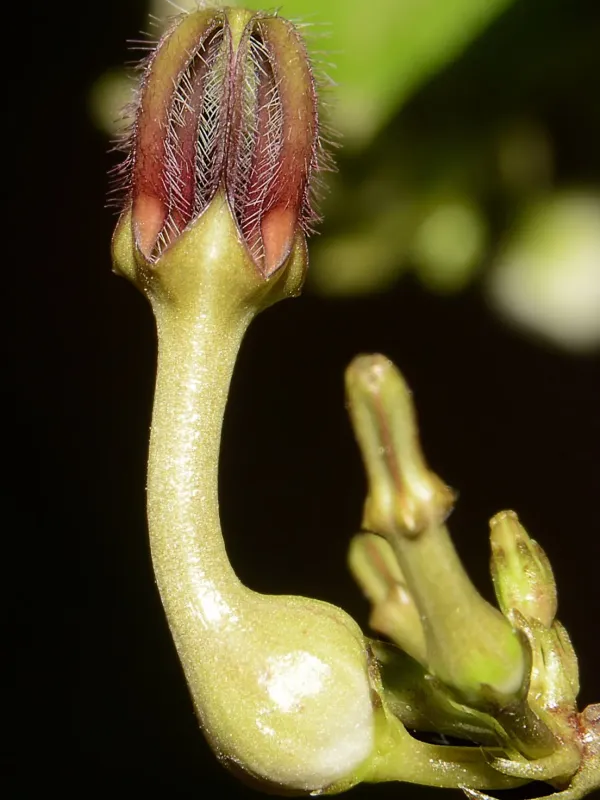
The plant is characterized by its succulent stems and uniquely shaped, lantern-like flowers. These blossoms serve as temporary traps for small insects, which are crucial for the plant's pollination process in its native habitat.
For indoor cultivation, this species requires bright, indirect sunlight. While it appreciates high light levels, direct sunlight during the hottest part of the day should be avoided to prevent scorching of the leaves and stems.
Soil requirements are strict: the medium must be highly porous and fast-draining. A typical mix should consist of standard potting soil supplemented with a significant portion of pumice, perlite, or coarse grit to prevent root rot.
Watering should be done sparingly, allowing the substrate to dry out completely between waterings. During the dormant winter phase, the plant requires significantly less water to mirror its natural cycle and prevent physiological stress.
Main diseases and pests
Root rot is the primary threat to Ceropegia vignaldiana, often caused by overwatering or using soil mixtures with poor drainage properties. Once the root system is compromised, the plant struggles to recover.
Mealybugs are the most common insect pests that infest the plant, typically congregating in the axils of the leaves or along the nodes. Their presence is marked by white, cotton-like masses and sticky honeydew secretions.
Spider mites can also be a significant issue, particularly in environments with low air humidity and high temperatures. They cause chlorosis and eventual death of the affected plant tissues if not managed with proper acaricides.
Poor air circulation increases the risk of fungal infections such as stem blight. It is important to ensure that the environment has adequate ventilation, especially if the plant is kept in a dense collection of other houseplants.
Regular maintenance, including removing dead foliage and inspecting the plant for early signs of pests, is the best method of defense. Proper sanitation and avoiding chemical imbalances in the soil will keep the plant vigorous and resistant.