
Ceropegia sandersonii
Ceropegia sandersonii
Description
Growing requirements
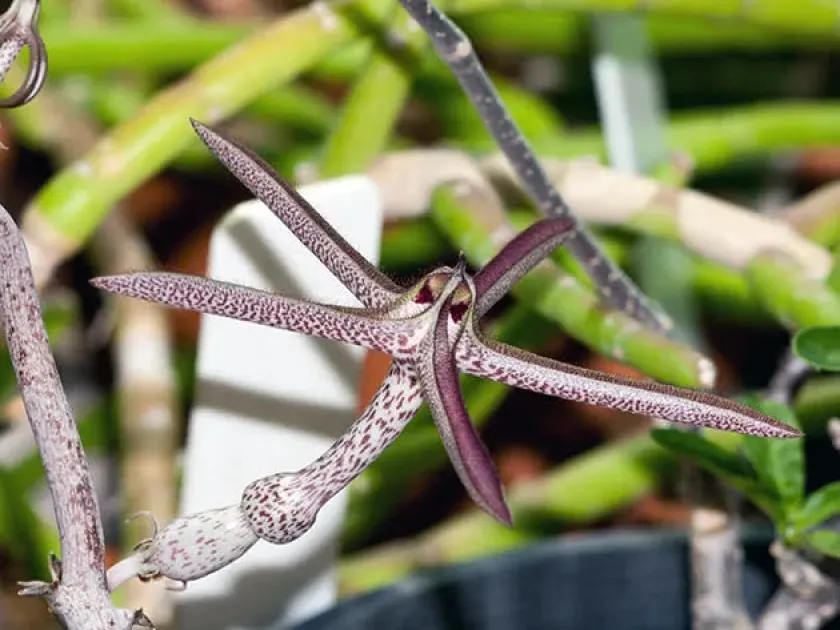
Ceropegia sandersonii, commonly known as the Parachute Plant, belongs to the Apocynaceae family. This succulent vine originates from South Africa and Mozambique, where it naturally climbs over shrubs and trees in woodland habitats.
The crop requires bright, filtered light to thrive. While it can tolerate some morning sun, harsh afternoon light may scorch the leaves and stems. Maintaining an ambient temperature range of 20°C to 25°C during the growing season is essential for vigorous vine development.
Soil requirements focus on excellent drainage. A specialized substrate for cacti and succulents, containing sand, perlite, and pine bark, is ideal for promoting root respiration. A pH level between 6.0 and 7.0 is considered optimal for nutrient absorption.
Watering frequency should strictly follow the cycle of the growing medium. One must ensure the soil is dry to the touch at least two inches deep before applying water again. During the winter dormancy period, watering should be significantly reduced to prevent rot.
Economically, this species is highly valued in the ornamental plant trade. Its unique green, parachute-shaped flowers make it a sought-after specimen for botanical collections and interior landscaping, particularly in temperate climate zones.
Main diseases and pests
Common pests affecting the plant include mealybugs and spider mites. Regular inspection of the foliage and stems is necessary to detect infestations early, followed by the application of horticultural soaps or systemic pesticides if required.