
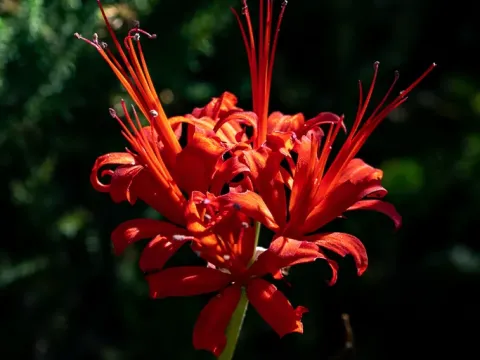
Nerine
Nerine Herb.
Nerine (Nerine Herb.) is a genus of perennial bulbous plants belonging to the Amaryllidaceae family. Originating from South Africa, these plants are adapted to regions with distinct dry and rainy seasons, often found in rocky, well-drained terrains.
What the section contains


Nerine
Successful cultivation requires a substrate with excellent drainage properties to prevent water accumulation near the bulb base. The ideal soil profile is a sandy loam mix that allows for deep root penetration while maintaining sufficient aeration.
The climate requirements involve high light intensity and moderate to warm temperatures during the active growth phase. To initiate flowering, the plants typically require a distinct resting period with cooler temperatures and minimal irrigation.
Soil nutrient levels should be balanced, with an emphasis on phosphorus and potassium to support flower development. Excessive nitrogen fertilization is discouraged, as it promotes lush vegetative growth at the expense of bloom quality and bulb health.
Water management is critical: consistent but moderate moisture is required during the vegetative cycle, followed by a dry period once the foliage begins to senescence. Proper timing of these shifts is essential for successful annual cycles.
The primary threats to Nerine crops are fungal pathogens, specifically Fusarium oxysporum, which attacks the root system under high-humidity conditions. Preventing waterlogging is the most effective cultural practice to mitigate this risk.
Pests such as bulb mites and aphids pose significant challenges to plant vigor. These pests can vector viral diseases, which are particularly devastating for bulbous stock as they are persistent across vegetative propagation cycles.
Integrated Pest Management (IPM) strategies are recommended, including the use of high-quality, disease-free planting material and rigorous sterilization of tools. Chemical controls should be applied only when population thresholds are exceeded.
Monitoring the foliage for discoloration or distorted growth is necessary for early detection of infestations. Regular inspections ensure that isolated outbreaks can be managed before they spread throughout the entire crop.
Post-harvest care involves curing the bulbs in a dry, ventilated environment to heal any mechanical damage sustained during extraction, thereby creating a barrier against opportunistic pathogens during storage.