
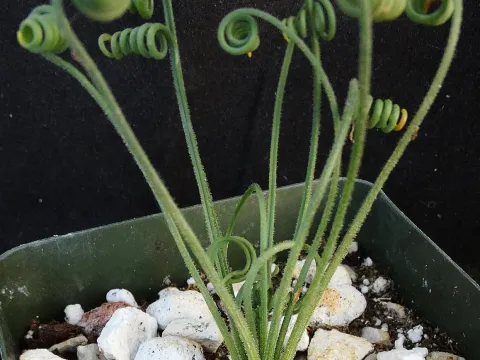
Albuca hybrids
Albuca hybrids
Albuca hybrids are perennial bulbous plants belonging to the Asparagaceae family. Originally native to arid regions of Southern Africa, these plants have adapted to survival in harsh, sun-drenched environments, which defines their specific physiological requirements for cultivation today.
What the section contains
Albuca hybrids
The culture thrives in well-draining, sandy substrates that prevent moisture accumulation around the bulb. Sufficient light exposure is critical; these plants require bright, direct sunlight to maintain healthy growth and to trigger their characteristic leaf spiraling, which is a major ornamental feature of the hybrids.
Temperature management is a key factor in the plant's life cycle. During the growing season, they prefer temperatures ranging between 20°C and 25°C. Following the blooming period, a cool, dry dormant phase is essential for the plant to properly store energy for the next cycle.
Watering techniques must be precise: moderate during the growth phase and minimal to zero during the dormancy period. Because the bulbs are highly susceptible to rot, providing excellent drainage is the most important agronomic practice to ensure the longevity of the plant in a controlled environment.
In terms of agricultural use, Albuca hybrids are primarily utilized in the nursery and ornamental trade. They are favored by collectors and interior landscapers due to their drought tolerance and striking aesthetic form, which sets them apart from conventional bulbous species in the market.
The primary threats to Albuca hybrids are soil-borne fungal diseases, specifically root and bulb rot caused by excessive humidity. Proper soil structure and aeration are the most effective preventive measures against these pathogens, as wet conditions quickly lead to total bulb decomposition.
Insect pests, including mealybugs and spider mites, are common issues in indoor cultivation environments. Maintaining appropriate airflow and monitoring for signs of infestation is essential for preserving plant health, as these pests can rapidly sap the plant's vitality and affect its overall development.
- Fusarium wilt
- Root and bulb rot
- Mealybugs
- Spider mites