
Albuca osmynella
Albuca osmynella
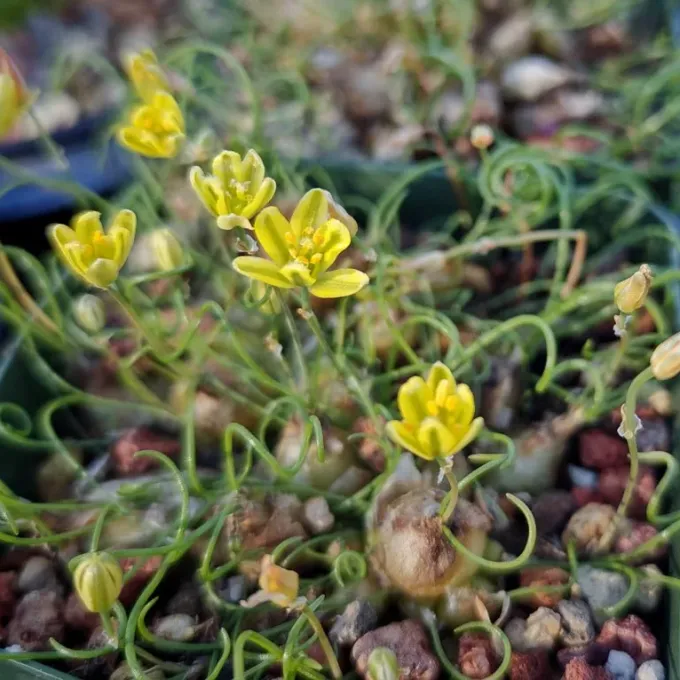
Description
Growing requirements
Albuca osmynella is a perennial bulbous plant belonging to the Asparagaceae family. Native to the arid regions of Southern Africa, it is adapted to harsh environmental conditions, relying on its bulb to store essential moisture during dry seasons.
The plant features a basal rosette of narrow, often succulent leaves and produces erect flower stalks with characteristic nodding flowers. Botanically, it represents a specialized group of geophytes that prioritize water conservation through structural adaptations in their foliage and root system.
To cultivate this species successfully, growers must provide high light levels and a very porous, fast-draining substrate. Because of its origin, the plant requires a strict distinction between the active growing season and the dormant phase, where it must be kept dry.
Soil composition should lean towards sandy or stony textures to prevent moisture retention around the bulb. Overwatering is the most common mistake in managing this crop, often leading to rapid tissue decay and eventual plant loss in a greenhouse environment.
In terms of agricultural and horticultural use, Albuca osmynella is primarily valued as a specialty ornamental plant. Its cultivation requires precise management of the light-to-water ratio to ensure the bulb develops sufficient energy to produce flowers during the appropriate growth cycle.
Main diseases and pests
The primary threats to Albuca osmynella are fungal infections resulting from damp conditions or poor soil drainage. Root rot is particularly lethal for this species, as the bulb can decompose rapidly when exposed to prolonged dampness in the substrate.
Pests such as mealybugs and spider mites are known to colonize the foliage in indoor or greenhouse settings. These pests feed on the sap, causing significant stress and potentially stunting the growth of the bulb, which may lead to smaller floral displays.
Management of these threats involves strictly regulated ventilation and spacing between pots to ensure airflow. If an infestation occurs, targeted acaricides or insecticides should be applied carefully, avoiding excessive chemical accumulation in the plant tissues.
Environmental stress, such as improper temperature fluctuations or inadequate winter chilling, can hinder the plant's ability to complete its biological cycle. Maintaining consistent conditions according to the plant's natural rhythm is the most effective way to prevent disease outbreaks.
Regular inspection of the basal area and the leaf underside is recommended for early detection of potential issues. Keeping the surface of the soil clean and dry helps in mitigating the risk of pathogen transmission within a collection of these plants.