
Albuca pulchra
Albuca pulchra
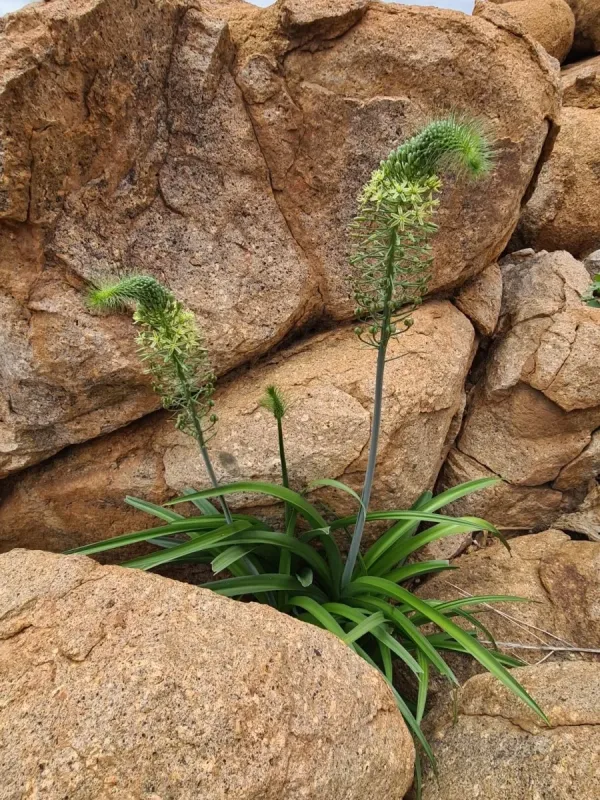
Description
Growing requirements
Albuca pulchra is a perennial bulbous plant belonging to the Asparagaceae family. Native to the rocky slopes and arid landscapes of South Africa, it is well-adapted to environments where water availability is strictly seasonal and drainage is excellent.
Botanically, the plant features a rounded bulb and a rosette of fleshy, channelled leaves. The inflorescence consists of a raceme with pendulous, yellow-green flowers often characterized by a sweet, pleasant fragrance that emerges during the active blooming season.
Light requirements for this species are significant, as it needs bright, indirect light to maintain a compact growth habit. Exposure to direct sunlight is generally safe, provided the plant is gradually acclimatized to avoid scorching the leaf tips.
The soil must be exceptionally well-draining, mimicking its natural habitat. A standard cactus or succulent mix, amended with extra pumice or coarse grit, is highly recommended to ensure that water does not linger around the bulb, which is prone to rot.
Cultivation requires a distinct dormant period. During the winter, the plant should be kept cool and dry to mimic the dry season of its origin, while spring and summer require moderate watering once the soil has dried out completely between sessions.
Main diseases and pests
The most common threat to Albuca pulchra is the over-accumulation of moisture in the substrate, which almost inevitably leads to fungal bulb rot. This condition is difficult to reverse once the rot reaches the core of the bulb.
Pests such as mealybugs and spider mites are frequent invaders, especially in indoor environments where airflow may be limited. These pests thrive in dry conditions and can quickly weaken the plant by feeding on its sap.
To prevent these infestations, it is advised to clean the leaves periodically and maintain an environment with adequate air circulation. If pests are detected, the use of systemic insecticides or horticultural oils is effective.
Good hygiene practices, such as removing dead foliage and avoiding overhead watering, significantly reduce the risk of disease. Keeping the soil surface dry is a critical preventative measure against common fungal pathogens.
In case of severe root distress, the plant should be unpotted to inspect the health of the bulb. If soft spots are found, careful excision of the decayed tissue followed by dusting with a fungicide powder is necessary before repotting into fresh medium.