

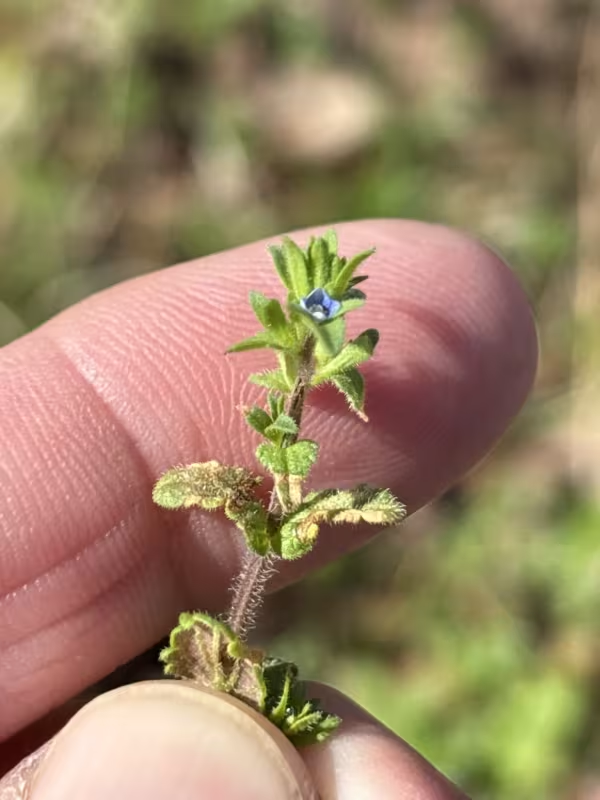
Description
Growing requirements
Corn speedwell (Veronica arvensis L.) is a common annual weed member of the Plantaginaceae family. It is widely distributed across temperate regions and is recognized as a significant weed in cereals and turfgrass.
The plant thrives in well-drained, porous soils. It is particularly competitive in fields where tillage is minimal, as it adapts quickly to the moisture levels available in the upper soil layers during early spring.
Botanically, the species is defined by its small, pubescent leaves and inconspicuous blue or white flowers. It is an prolific seed producer, capable of surviving through various environmental conditions.
Effective management begins with vigorous crop establishment. Dense crop canopies effectively suppress the germination and growth of Corn speedwell by limiting light availability.
Cultivation practices such as autumn plowing and pre-emergent harrowing are standard methods to reduce the seed bank in the soil before spring sowing commences.
Main diseases and pests
Corn speedwell acts as a potential host for various agricultural pests, including aphids that may later infest cash crops, causing significant yield losses if not managed properly.
The plant can carry fungal pathogens that lead to leaf spots or blights, particularly in humid field conditions, which can cross-contaminate surrounding sensitive crops.
Weed competition for nitrogen and phosphorus is particularly intense during the seedling stage of cereal crops, where the weed's fast growth rate allows it to outcompete cultural plants.
Chemical control strategies are highly effective when applied during the rosette stage. Post-emergent herbicides with broadleaf activity are generally recommended for commercial operations.
Farmers are advised to clean farm equipment thoroughly between fields to prevent the dispersal of seeds, as they are small and easily transported via machinery and water runoff.
Reference
Connections · Corn speedwell
Most often together:
Marketplace