
Veronica odora
Veronica odora Hook. f.
Description
Growing requirements
Veronica odora is a distinct species of evergreen shrub belonging to the Plantaginaceae family. Originally native to the subalpine regions of New Zealand, this plant has adapted to cooler, moist environments and is highly valued in ornamental horticulture for its neat, compact growth habit.
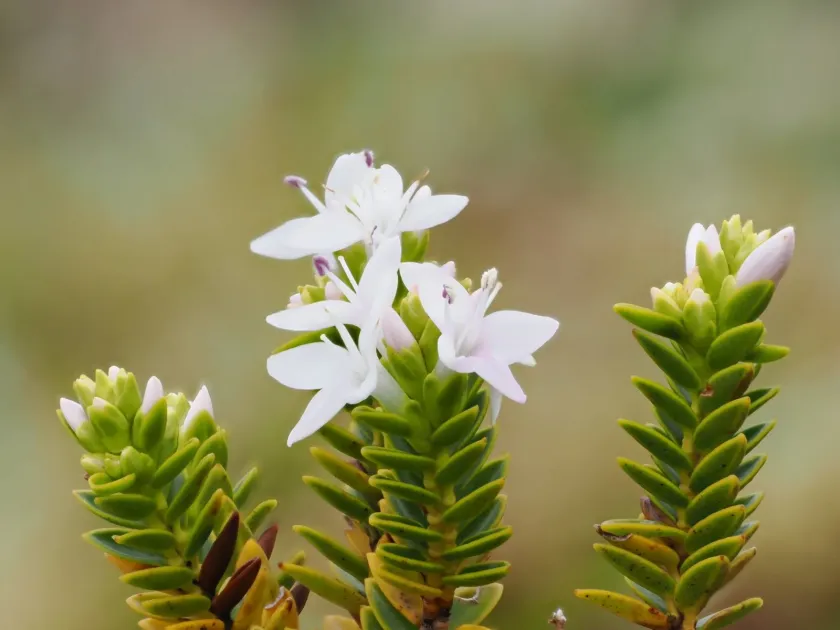
The botanical structure of the plant features small, leather-like leaves that are densely arranged along the branches, giving it a somewhat conifer-like appearance. Its small white flowers, appearing in terminal heads, provide a subtle yet beautiful display, especially when cultivated in group plantings.
For successful cultivation, Veronica odora requires well-draining, slightly acidic soil rich in organic matter. Soil structure is critical; the species is highly susceptible to root damage if the substrate is compacted or prone to waterlogging, necessitating excellent drainage in both open-ground and container settings.
Regarding climate, this species prefers mild summers and stable temperatures. It is not well-suited for extremely hot or arid regions and thrives best in semi-shaded positions protected from desiccating winds. Consistent moisture levels, combined with good air circulation, are essential for plant vigor.
General maintenance involves regular irrigation during dry spells and light annual pruning to maintain shape. Applying organic mulch around the base helps stabilize soil temperature and keeps root moisture consistent, ensuring the plant remains healthy throughout the growing season.
Main diseases and pests
Root rot is the most significant threat to Veronica odora, typically occurring when the soil remains saturated for extended periods. This condition often leads to rapid decline and plant death, making soil drainage management the most critical aspect of the plant's pathology prevention.
Pests such as aphids and spider mites can occasionally affect the plant, particularly in stressed specimens. These insects typically attack the soft growth tips or the underside of the leaves, and their presence can be monitored through regular weekly inspections during the active growing season.
Fungal leaf spots and grey mold (Botrytis) may arise in conditions of high humidity with limited airflow. To mitigate these risks, it is recommended to maintain adequate spacing between plants and avoid overhead watering, which keeps foliage wet for prolonged periods.
Nutritional imbalances can also leave the plant vulnerable; an excess of nitrogen can produce lush, soft growth that is more attractive to pests. Using balanced, slow-release fertilizers is generally preferred to ensure steady and strong tissue development.
If disease symptoms appear, removing infected foliage promptly is essential to prevent spores from spreading. In case of persistent infestations, target specific applications of organic-certified pesticides or fungicides are recommended, following integrated pest management principles.