
Veronica elliptica
Veronica elliptica G. Forst.
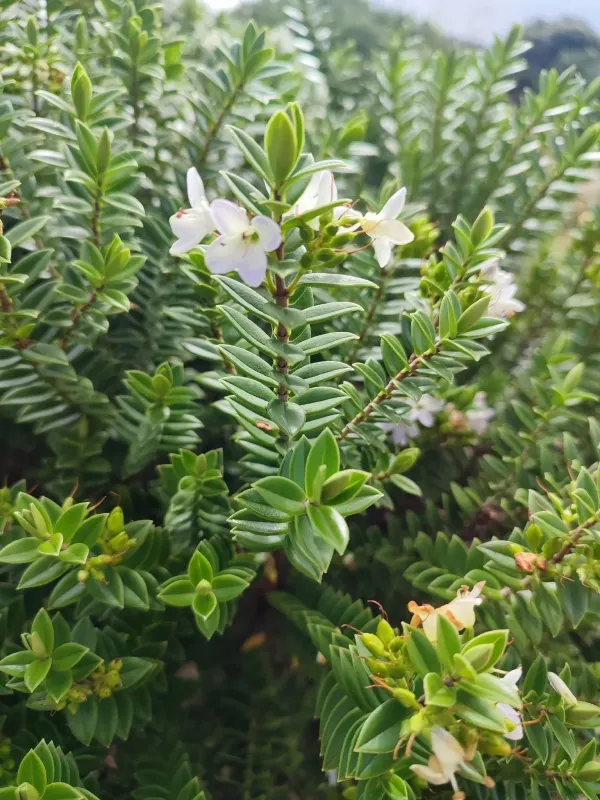
Description
Growing requirements
Veronica elliptica is an evergreen shrub belonging to the Plantaginaceae family. Known for its robust structure and glossy, leathery leaves, it is a significant species for temperate coastal landscapes.
The plant originates from the Southern Hemisphere, particularly New Zealand and parts of South America. It thrives in maritime climates, showing remarkable tolerance to salt spray and oceanic winds.
Regarding climate, this species prefers mild, stable temperatures and high humidity. It is sensitive to extreme frost, which makes it suitable primarily for mild oceanic regions where winter temperatures remain above freezing.
For optimal growth, the soil must be well-drained and slightly acidic. Growers should avoid heavy, waterlogged clays, as they significantly increase the risk of physiological stress and root damage.
Horticulturally, it is prized for its year-round greenery and seasonal flowers. Its primary utility is in landscaping as a resilient windbreak or a low-maintenance hedge in coastal garden designs.
Main diseases and pests
The most common threats to Veronica elliptica are related to soil drainage. Phytophthora and other root rot pathogens frequently attack the plant if the soil remains excessively wet for long periods.
Powdery mildew is a common foliage disease, especially in areas with poor airflow and high humidity. Proper spacing between individual plants is essential to facilitate air circulation and minimize fungal spores.
Pests like aphids and spider mites can infest the shrubs during the growing season. They weaken the plant by extracting sap from tender new growth, often causing leaf deformation and discoloration.
- Monitor foliage regularly for early signs of infestation.
- Apply horticultural oils to manage soft-bodied insects.
- Maintain a consistent pruning schedule to promote healthy branching.
- Ensure irrigation does not splash water onto the leaves.
- Remove and destroy severely affected branches to prevent disease spread.
Professional management requires a proactive approach to soil health and sanitation. By managing irrigation levels and ensuring good ventilation, growers can successfully maintain vigorous and healthy stands.