
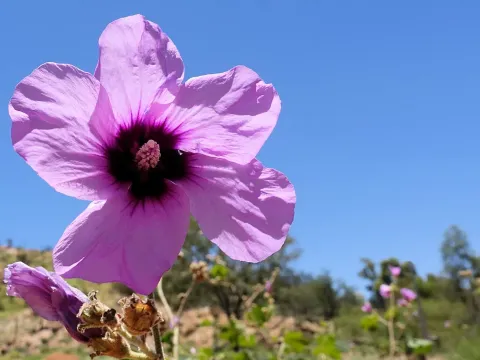
Radyera
Radyera
Radyera is a genus of flowering plants belonging to the Malvaceae family. These plants are generally characterized as perennial herbs or subshrubs, often found in tropical or subtropical regions.
What the section contains

Radyera
The sowing process requires warm soil temperatures, ideally above 18-20 degrees Celsius, to ensure optimal germination rates for the seeds.
Seeds should be planted at a shallow depth of 2-3 centimeters in a loose, well-draining soil medium to facilitate early development of the root system.
In a commercial or experimental setting, seeds might require mechanical scarification to break dormancy and improve the uniformity of sprout emergence.
Adequate spacing is crucial during the sowing phase, as the plant tends to spread significantly as it matures, requiring sufficient airflow and space for photosynthesis.
Radyera thrives in environments with high light intensity and warm temperatures, as it is highly sensitive to frost and cold environmental conditions.
The ideal growing medium consists of fertile, well-drained loam or sandy-loam soil with a near-neutral pH balance ranging from 6.5 to 7.5.
While the plant is considered a perennial in its native range, agricultural practices in temperate climates often treat it as an annual crop due to its low cold hardiness.
Regular maintenance, including shallow cultivation of the soil, is necessary to prevent compaction and ensure that the root system receives sufficient oxygenation.
Moisture management is key; while established plants possess some drought tolerance, consistent soil moisture is required during the early vegetative growth stages.
Common pests associated with this genus include aphids, which often cluster on the undersides of leaves and on developing stems to extract plant sap.
Fungal pathogens such as powdery mildew can be a significant threat, particularly in greenhouses or regions with high humidity levels and poor ventilation.
Root rot, often caused by improper drainage and stagnant water, can lead to the rapid decline of the plant if soil conditions are not properly monitored.
Spider mites are prevalent in hot, arid conditions and can cause severe chlorosis and leaf drop if left unchecked by integrated pest management strategies.
Proactive monitoring and the application of organic or chemical fungicides and insecticides are recommended to maintain plant health and maximize biomass yield.