
Pescatoria
Pescatoria
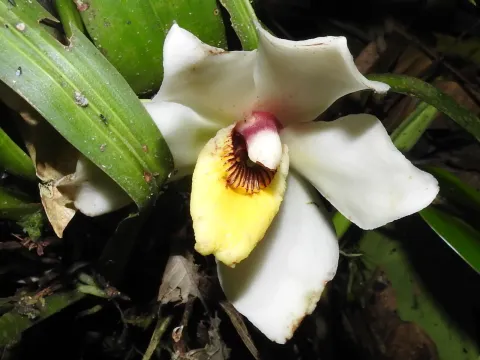
Pescatoria is a genus of epiphytic orchids belonging to the Orchidaceae family. In their natural habitat, these plants grow in the tropical forests of Central and South America, preferring humid and shaded conditions of the mountain mid-altitudes.
What the section contains


Pescatoria
Botanically, these are sympodial orchids that do not possess distinct pseudobulbs, which determines their specific horticultural requirements. The leaves are arranged in basal rosettes, featuring a sword-like shape and a vibrant green color that requires protection from direct sunlight.
For successful development, the culture requires stable temperature ranges of 18–24°C during the day and a necessary nocturnal temperature drop. The plant does not tolerate extreme heat and demands high humidity levels, preferably between 70% and 80%.
Moisture-retaining substrates based on conifer bark, sphagnum moss, and charcoal are used for planting. The container must ensure excellent aeration of the root system, while it is critical to avoid water stagnation, which quickly leads to root rot.
Watering must be regular because the plant lacks water-storage organs like bulbs. During the active growth phase, the substrate should remain slightly moist, while in winter, the frequency of watering should be reduced moderately depending on the light intensity.
The primary enemy of Pescatoria is an improper watering regime, which leads to the development of fungal infections and root rot. In conditions of excessive humidity and poor air circulation, leaves can develop various types of spots and bacterial lesions.
Among pests, the greatest threat is posed by spider mites and scale insects, which multiply rapidly in indoor environments with low humidity. Mealybugs, which hide in the leaf axils, also pose a significant threat to the plant's health.
To control diseases, it is recommended to use systemic fungicides, removing affected plant parts beforehand. Prevention involves regular ventilation of the growing area and maintaining cleanliness of the substrate.
Against pests, contact and systemic insecticides are the most effective. It is important to perform regular visual inspections of the leaf undersides, where insect colonies tend to aggregate.
While home remedies may be used in the early stages of an infestation, professional cultivation implies the use of certified pesticides for the protection of ornamental plants.