

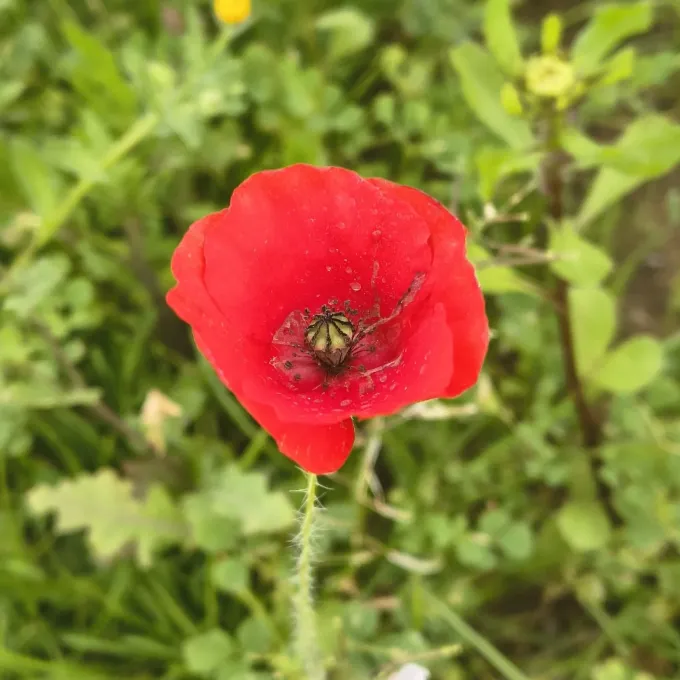
Description
Sowing dates
The common poppy is an annual plant that reproduces through seed dissemination. Germination typically begins in early spring when temperatures in the topsoil layers rise, allowing the seeds to break dormancy efficiently.
The seeds possess a remarkable ability to remain viable in the soil seed bank for several decades. This biological adaptation ensures that populations can re-emerge even after years of diligent field management and weed control.
Seedlings emerge best from shallow depths of no more than a few centimeters. Deeper cultivation techniques can bury seeds, preventing them from germinating until they are brought back to the surface during subsequent plowing.
In agricultural systems, common poppy emergence is often synchronized with the planting of winter cereals. Consequently, the weed develops alongside the crop, competing for nutrients and space throughout the growing season.
Effective management strategies involve a combination of stale seedbed techniques, mechanical weeding, and the strategic application of herbicides to minimize the competition during the critical early stages of crop development.
Growing requirements
Common poppy thrives in well-lit, open environments, reflecting its status as a highly photophilous plant. It is frequently found in sunny fields where it can maximize its photosynthetic capacity without shading from competing plants.
The species prefers nutrient-rich, neutral to slightly alkaline soils. It is particularly successful in areas with high carbonate content, which support its rapid growth and vigorous development of floral structures.
While the plant shows a preference for moderate moisture levels, it exhibits significant resilience against dry spells once established. Its taproot allows it to access water deeper in the soil profile than many other weed species.
Temperature tolerance is a key feature of the common poppy. It is capable of withstanding early spring frosts, which allows it to get an early start compared to many summer annual weeds that require consistently warm weather.
Spatial distribution of the common poppy is often influenced by soil structure and compaction. It tends to colonize areas where the soil has been disturbed, making it a persistent presence in agricultural landscapes across Europe.
Main diseases and pests
The common poppy is susceptible to various fungal pathogens, with powdery mildew being the most notable. This disease typically appears as a white, powdery growth on foliage, which can significantly inhibit the plant's growth.
Downy mildew is another common issue, particularly in humid conditions, causing necrotic spots and eventual senescence of the leaves. Proper crop rotation is often cited as a primary preventive measure against these fungal issues.
Insect pests such as the poppy root weevil pose a significant threat to the plant's reproductive cycle. The larvae feed within the stem and seed capsule, severely damaging the developing seeds and impacting the plant's spread.
Aphid infestations are also frequently observed, causing sap depletion and transmitting various plant viruses. High aphid populations can lead to stunted growth and reduced seed production for the infested plants.
Managing these threats in a field setting usually involves integrated pest management (IPM) practices, focusing on mechanical control and habitat management to prevent large-scale outbreaks within crop fields.
Content graph
Connections · Common poppy
Most often together:
Marketplace