
Aztec tobacco
Nicotiana rustica L.
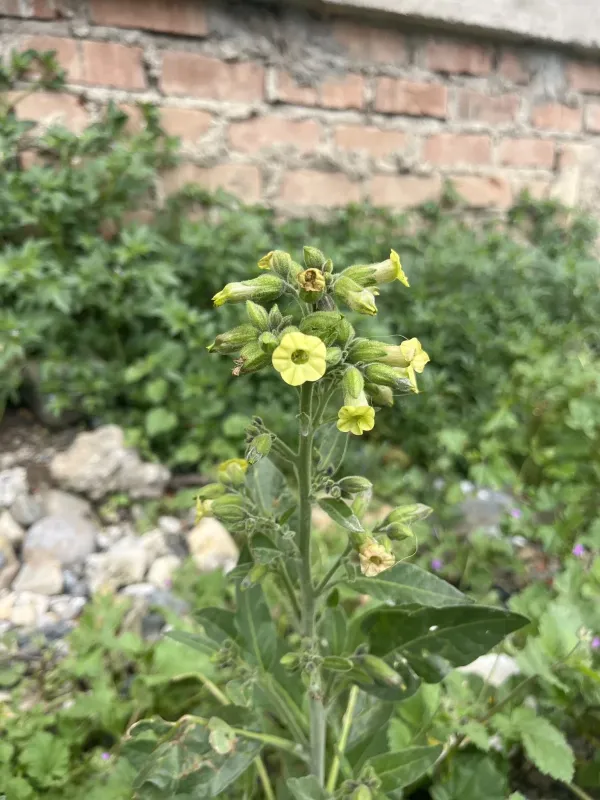
Description
Sowing dates
The sowing of Aztec tobacco (Nicotiana rustica) typically begins in early spring, as this species demonstrates significantly higher cold tolerance compared to common tobacco (Nicotiana tabacum). In temperate climates, seeds are sown in protected seedbeds or greenhouses to produce robust seedlings ready for transplanting once the risk of frost has passed.
A seedling-based approach is preferred as it ensures uniform stand establishment and allows the plants to build sufficient vegetative mass before entering critical growth phases. Because the seeds are extremely small, they are sown at a shallow depth or broadcast on the soil surface, followed by light compaction to ensure good seed-to-soil contact.
In regions with milder climates, direct sowing in open fields is possible, though this necessitates meticulous soil preparation and moisture management during the germination period. The timing for transplanting is usually determined by the cessation of nocturnal frost threats, allowing for maximum growing season duration.
Plant density is optimized based on the intended use, typically following a pattern with row spacings of 60 to 70 centimeters. This configuration is essential for promoting adequate airflow, which reduces humidity around the foliage and facilitates mechanical or manual maintenance throughout the growth cycle.
Timely sowing is a critical determinant of total yield, with the growing season lasting between 90 and 120 days. An early start allows the crop to take full advantage of spring soil moisture and increasing solar irradiance, which are necessary for the development of the large, potent leaves characteristic of this species.
Growing requirements
Aztec tobacco, a member of the Solanaceae family, originates from South America but has adapted to a wide range of climatic conditions. It is notably hardier than its relative, N. tabacum, allowing it to thrive in regions with shorter summers and cooler average temperatures.
The crop prefers well-structured, fertile, loam or sandy-loam soils rich in organic matter. Efficient drainage is paramount; stagnant water in the root zone is detrimental, often leading to rapid root decay and stunted growth, which severely limits the overall potential of the plant stand.
Abundant light is essential for the healthy development of N. rustica, requiring open sites free from overhead shading and strong, desiccating winds. The plant is highly responsive to fertilizer inputs, particularly nitrogen, which is fundamental for sustaining the rapid leaf expansion needed for high yields.
Consistent soil moisture is required, especially during the peak growth phase. While drought stress causes early lignification and poor leaf quality, excessive moisture during the final maturation stage can lead to challenges during the post-harvest drying and curing processes.
Maintenance practices include frequent shallow cultivation to eliminate weeds and improve soil aeration. Topping (removing the inflorescence) and suckering (removing lateral shoots) are critical agronomic practices used to divert photosynthates into the primary leaves, maximizing their size and alkaloid concentration.
Yield
The yield potential of Aztec tobacco is directly correlated with management intensity and soil fertility. In commercial settings, average yields range from 15 to 25 decitonnes of dry cured leaf per hectare under optimal agronomic conditions and proper nutrient management.
Biological resilience is a hallmark of this species, allowing growers to secure stable harvests even in seasons characterized by suboptimal weather. The successful implementation of precise topping and pruning techniques is vital for maximizing biomass production and ensuring high-quality raw material.
Modern production systems often integrate drip irrigation and fertigation to maintain steady growth rates. By balancing macronutrients throughout the developmental stages, producers can significantly mitigate losses and enhance the morphological characteristics of the harvested leaves.
The final yield is influenced by the genetic potential of the specific landrace or variety grown. Both small-leaf and large-leaf variants exist, with selection criteria based on the intended secondary processing and the specific agro-ecological constraints of the cultivation region.
Achieving high yields is also dependent on minimizing harvest losses. Efficient logistics during the picking process and the use of well-ventilated curing structures prevent the degradation of leaves, ensuring that the maximum amount of biomass reaches the final fermentation stage.
Main diseases and pests
Aztec tobacco is susceptible to several fungal pathogens, most notably damping-off (Rhizoctonia/Pythium) affecting young seedlings, and powdery mildew, which can proliferate in humid conditions on mature plants. Various foliar leaf spots can also degrade the quality of the harvested crop.
Key insect pests include aphids, which cause direct damage through sap feeding and act as vectors for viral pathogens. Tobacco thrips and cutworms can also cause substantial damage by consuming leaf tissue, rendering the leaves aesthetically and qualitatively compromised.
Management strategies involve a multifaceted approach, including strict crop rotation (avoiding solanaceous crops for 3-4 years) to break pest cycles, and the judicious use of insecticides only when population thresholds are exceeded during critical growth stages.
Viral diseases, such as Tobacco Mosaic Virus (TMV), represent a significant management challenge as they cannot be chemically controlled. Prevention is centered on utilizing certified healthy seed, practicing rigorous hygiene on equipment, and controlling insect vectors early in the season.
Effective phytosanitary practices, including the prompt removal of crop residues post-harvest, are essential for eliminating overwintering sites for fungal spores and insect larvae. Maintaining a clean field environment is the most effective way to prevent widespread outbreaks.
Harvesting
Harvesting of Aztec tobacco occurs during the phase of physiological maturity, characterized by a visible shift in leaf color towards a pale yellow and the accumulation of a sticky, resinous exudate on the leaf surfaces. The harvesting process can be either single-pass or multi-pass.
Selective priming, where leaves are harvested sequentially from the bottom to the top of the plant as they mature, is the most common method. This technique ensures that each leaf is gathered at its peak maturity, which is crucial for achieving the desired chemical composition.
Alternatively, the entire plant can be harvested by cutting the stalk near the ground. This method reduces labor costs but requires subsequent manual sorting and classification of the leaves post-curing, as the leaves from different stalk positions will have varying qualitative traits.
Following harvest, leaves are wilted and moved to curing barns. The rate and uniformity of moisture removal are the most important factors for preventing decay and mold, and for developing the characteristic color and physical properties of the cured product.
Fermentation is the concluding phase of leaf preparation. Through controlled exposure to specific temperature and humidity levels, the tobacco undergoes complex biochemical changes, which are essential for refining the final aroma, flavor, and texture of the prepared material.