
Fragrant tobacco
Nicotiana suaveolens Lehm.
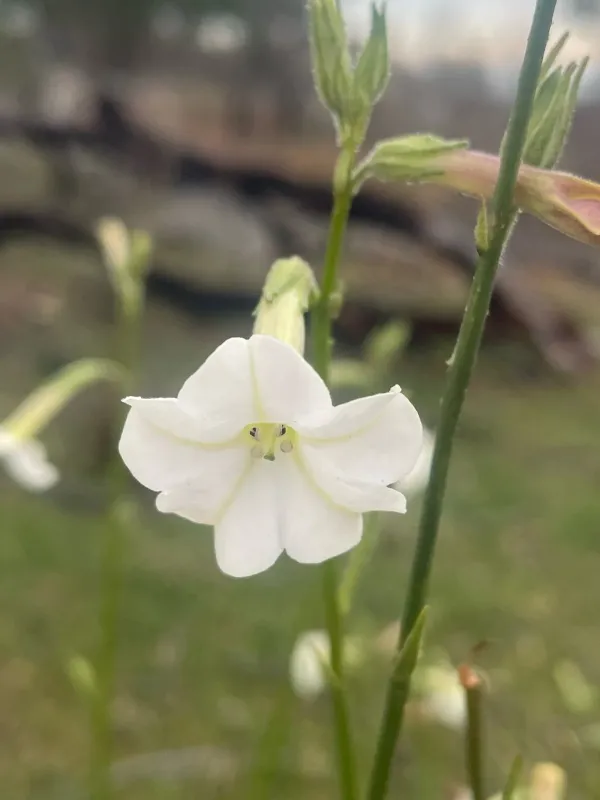
Description
Sowing dates
Fragrant tobacco (Nicotiana suaveolens Lehm.) is a herbaceous plant belonging to the Solanaceae family. While it is a perennial in its native range, it is typically cultivated as an annual crop in gardens and commercial flowerbeds.
The cultivation process begins with sowing seeds in trays during early spring. Since the seeds are extremely small, they should be scattered on the surface of the soil and pressed gently without covering them deeply.
Germination requires consistent moisture and light. Providing a warm environment with temperatures around 20 degrees Celsius ensures uniform emergence of the seedlings within 10 to 14 days.
Transplanting into individual pots allows the seedlings to establish a healthy root system before being hardened off. This hardening phase is essential to prepare the plants for outdoor conditions.
Once the risk of frost has passed, the tobacco plants are set into the ground. They are usually spaced 30 to 40 centimeters apart to prevent crowding and allow for adequate air circulation.
Growing requirements
Fragrant tobacco thrives in full sun, which is necessary for maximizing its aromatic properties and decorative floral displays. In shade, the stems tend to become leggy and weak.
The ideal soil for this crop is fertile, well-draining, and rich in organic matter. Sandy loam soils work best, as they prevent water stagnation which can cause root issues.
Water management is a critical part of the agronomic practice. Plants should be kept consistently moist during the peak summer months, but it is important to avoid waterlogged conditions.
Regular fertilization with a balanced, water-soluble fertilizer helps maintain vigorous growth. Nitrogen-based fertilizers are applied early in the season, while potassium-rich formulas support blooming.
Maintaining a neutral soil reaction is beneficial. If the soil is too acidic, supplemental lime may be required to balance the pH, ensuring optimal nutrient availability for the plant.
Main diseases and pests
Aphids are common pests that attack the tender shoots and leaves of the tobacco plant. They can be controlled using soft soaps or biological control agents if caught early enough.
Powdery mildew is a prevalent disease, especially in environments with poor air movement and high humidity. It appears as a white dust on the foliage, eventually causing leaf necrosis.
Root rot, caused by various soil-borne fungi, often develops in areas where water pools around the base of the plant. Ensuring excellent soil drainage is the primary defense strategy.
Cutworms can pose a problem to young transplants by chewing through the stems at the soil line. Using physical barriers like collars around the plants can protect them during early development.
- Sanitizing the planting area.
- Applying fungicides as a preventative measure.
- Rotating crops to avoid soil-borne pathogens.