
Nicotiana glauca
Nicotiana glauca Graham
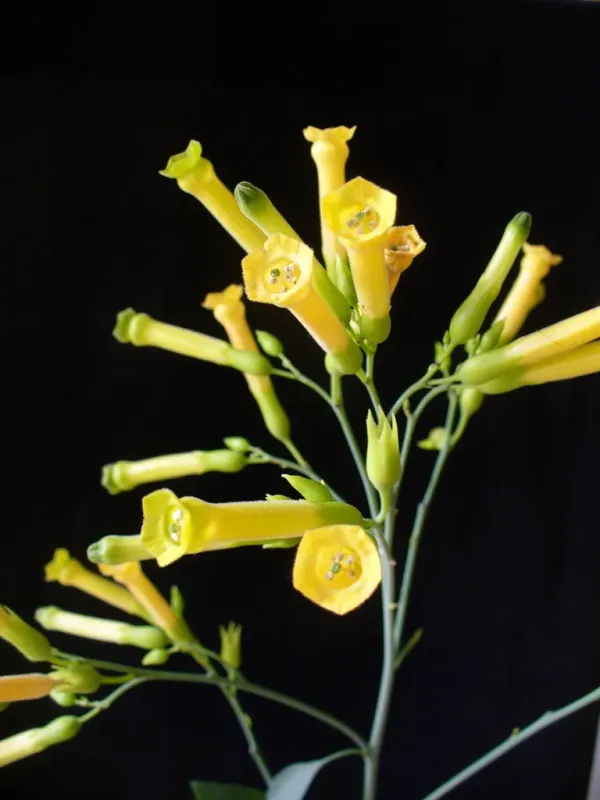
Description
Sowing dates
Nicotiana glauca, commonly known as tree tobacco, is a woody shrub belonging to the Solanaceae family. Propagation is primarily achieved through seeds, which are sown in late winter or early spring in a warm greenhouse environment.
The seeds are exceptionally small, requiring surface sowing on a moist, well-draining seed-starting mix. They should not be covered deeply, as they require light to germinate effectively within a temperature range of 20–25 degrees Celsius.
Seedlings should be pricked out into individual containers once the first true leaves emerge. The plant exhibits rapid growth, often necessitating early repotting to prevent root constriction and ensure steady vertical development.
Transplanting to the final location must be delayed until all frost risks have passed. This species is highly sensitive to cold temperatures, and early exposure can result in stunted growth or plant death.
Hardening off is a critical stage for successful cultivation. Gradually introducing the plants to outdoor conditions over a week helps them adapt to wind, sun, and fluctuations in ambient humidity.
Growing requirements
Native to South America, Nicotiana glauca thrives in sunny, arid environments. It requires full sun exposure to maintain its characteristic glaucous blue-grey foliage and healthy, robust growth patterns.
Soil requirements are relatively modest; the plant prefers well-drained, sandy, or rocky soils. It is highly drought-tolerant once established, making it an excellent candidate for xeriscaping in Mediterranean climates.
Over-watering is the most significant threat to its health. The root system is prone to rot in waterlogged conditions, so ensuring the soil dries out between watering intervals is essential for longevity.
Fertilization should be kept minimal. While the plant responds to balanced nutrients during its active growth period, excessive nitrogen can cause weak, spindly stems that lack the structural integrity required to stand upright.
Pruning is recommended to manage size and shape. Since the plant can reach heights of several meters, regular trimming of the tips promotes branching and results in a more dense, ornamental shrub structure.
Yield
While not a traditional food crop, the yield of Nicotiana glauca is measured in its ornamental impact and biomass production. It is highly valued in landscaping for its unique aesthetic and fast growth rate.
In optimal conditions, a single plant can produce a significant amount of foliage and clusters of yellow tubular flowers within a single season. Its structural nature allows it to serve as a fast-growing screen or background plant.
The plant demonstrates high efficiency in seed production, with prolific flowering leading to numerous seed capsules. This makes it easy to maintain and propagate the species across large areas if managed correctly.
When grown in containers, the overall yield of plant material is proportional to pot size. Using large containers facilitates better root development, which directly correlates to the height and vigor of the shrub.
Proper maintenance of the canopy through selective thinning can improve the overall visual appeal of the stand, ensuring that each plant receives adequate light and air circulation.
Main diseases and pests
Pests such as aphids, whiteflies, and spider mites represent the primary threat, especially in hot and dry climates. Early detection and the use of insecticidal soaps can effectively manage these populations.
Fungal issues, including powdery mildew, can occur in poorly ventilated areas or under conditions of high humidity. Proper spacing between plants is the most effective cultural control measure to minimize these risks.
Viral infections can affect this species, manifesting in leaf curling or mosaic patterns. Infected plants should be promptly removed and destroyed to prevent the spread of pathogens to other nearby solanaceous crops.
It is crucial to note that the plant contains anabasine, a toxic alkaloid. Handlers should use gloves during maintenance, and the plant must be kept away from areas accessible to children or livestock.
- Recommendation: Use well-draining soil mixes to avoid root rot.
- Recommendation: Ensure good air movement to mitigate fungal growth.
- Recommendation: Wear protective gear due to the presence of alkaloids.