
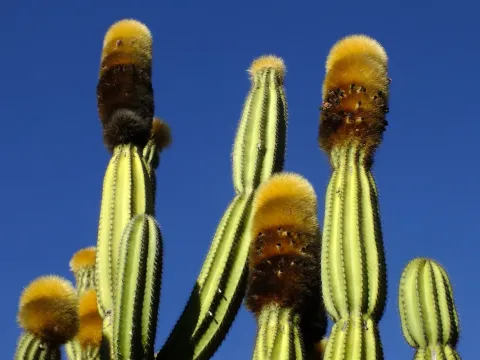
Mitrocereus
Mitrocereus
Mitrocereus is a genus of large, arborescent cacti belonging to the family Cactaceae. Known for their impressive stature and columnar growth habit, these plants represent the architectural giants of the arid desert ecosystems.
What the section contains

Mitrocereus
Originating from the arid zones of Mexico, the plant is naturally adapted to high thermal fluctuations and scarce precipitation. In agricultural and horticultural contexts, it is primarily used for xeriscaping and as a specimen plant in arid-land gardening.
The soil requirements for Mitrocereus involve a highly permeable, gritty, and mineral-rich substrate. A successful cultivation media must ensure that water passes through rapidly, preventing the risk of waterlogging which is fatal to the root system.
Light intensity is the most critical environmental factor for this species. To maintain its robust structure and healthy epidermis, the plant requires full sun exposure throughout the day, mimicking the conditions of its native habitat.
Regarding irrigation, a cycle of thorough watering followed by complete soil desiccation is essential. The plant exhibits high drought tolerance, but care must be taken during the growth phase to ensure it receives enough moisture to support structural development.
The primary threats to Mitrocereus are physiological disorders caused by poor moisture management. Root rot remains the leading cause of mortality, often exacerbated by stagnant water in the substrate and inadequate soil drainage.
Mealybugs are frequent pests that congregate within the dense spine clusters of the cactus. Their presence not only weakens the plant through sap extraction but also creates entry points for secondary fungal infections.
Spider mites can be particularly damaging in greenhouse environments where air circulation is restricted. They puncture the surface cells, leaving behind characteristic scarring and discolorations that mar the visual appeal of the cactus.
Scale insects present another challenge, as their protective waxy shells make them resistant to simple contact sprays. Careful manual removal combined with systemic horticultural oils is often necessary for effective control.
Fungal spot diseases may occur when ambient humidity remains too high for extended periods, especially during cool seasons. Proper ventilation and maintaining a dry environment are the best preventative measures against these pathogens.