
Mauritiella
Mauritiella
Mauritiella is a genus of evergreen palms belonging to the Arecaceae family. Native to the tropical rainforests and wetlands of South America, these perennial plants are known for their distinct appearance and adaptation to humid environments.
What the section contains

Mauritiella
The plant thrives in a tropical climate where temperatures remain consistently high throughout the year, typically ranging between 20°C and 30°C. It requires a high level of humidity and is sensitive to frost and sudden changes in temperature.
Optimal soil conditions for Mauritiella involve well-drained, nutrient-rich substrates, preferably with high organic content. While the plant loves water, it is essential to prevent waterlogging, which can lead to root rot and other physiological disorders.
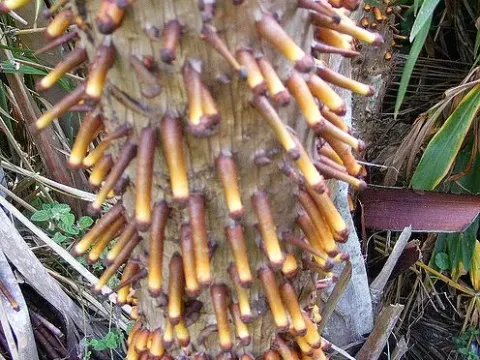
Botanically, Mauritiella is characterized by its slender, often spiny stems and elegant pinnate leaves. The plant grows in clumps or clusters, contributing to the biodiversity of riverine landscapes and swamp forests.
Cultivation practices include providing sufficient space for development and periodic organic fertilization. As a specialized tropical crop, it is mainly managed in agroforestry systems rather than intensive industrial plantations.
The primary economic value of Mauritiella lies in its edible fruits, which are harvested for local consumption. These fruits are rich in vitamins and are frequently utilized in juices, refreshing beverages, and local food processing.
The yield of the palm is determined by the environmental conditions and the age of the tree. The fruits are generally small, scaly drupes that develop in heavy clusters, providing a seasonal source of food in their native regions.
Productivity is highly dependent on light exposure and water availability. Regular monitoring of fruit development is essential to ensure that the harvest occurs at the peak of maturity for the best flavor profile.
Beyond food products, the fibers extracted from the leaves are sometimes utilized in local handicraft industries. The resilience of the fibers makes them suitable for weaving mats, baskets, and decorative items.
Harvesting requires careful planning due to the sharp spines on the stems. Using appropriate protective gear and tools is a standard practice to ensure both worker safety and the preservation of the palm's health.