
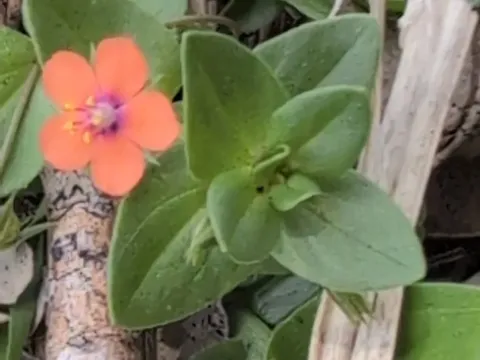
Loosestrife
Lysimachia L.
Loosestrife (genus Lysimachia) represents a group of perennial herbaceous plants belonging to the Primulaceae family. These plants are known for their adaptability and are widely used in both ornamental gardening and as cultivated botanical resources.
What the section contains
 Alfred's Loosestrife
Lysimachia alfredi Hance
Alfred's Loosestrife
Lysimachia alfredi Hance
 Fortune's loosestrife
Lysimachia fortunei Maxim.
Fortune's loosestrife hybrid
Lysimachia fortunei Maxim. x L. clethroides Duby
Fortune's loosestrife
Lysimachia fortunei Maxim.
Fortune's loosestrife hybrid
Lysimachia fortunei Maxim. x L. clethroides Duby
 Gooseneck loosestrife
Lysimachia clethroides Duby
Gooseneck loosestrife
Lysimachia clethroides Duby
 Gooseneck loosestrife (hybrid context)
Lysimachia barystachys x Lysimachia clethroides
Lysimachia barystachys
Lysimachia barystachys Bunge
Lysimachia chenopodioides
Lysimachia chenopodioides G. Watt ex Hook. f.
Gooseneck loosestrife (hybrid context)
Lysimachia barystachys x Lysimachia clethroides
Lysimachia barystachys
Lysimachia barystachys Bunge
Lysimachia chenopodioides
Lysimachia chenopodioides G. Watt ex Hook. f.
 Lysimachia christinae
 Hance
Lysimachia christinae
Lysimachia christinae Hance
 Lysimachia congestiflora
 Hemsl.
Lysimachia congestiflora
Lysimachia congestiflora Hemsl.
 Lysimachia monelli
 (L.) U. Manns & Anderb.
Lysimachia monelli
Lysimachia monelli (L.) U. Manns & Anderb.
 Scarlet pimpernel
Lysimachia arvensis (L.) U. Manns & Anderb.
Scarlet pimpernel
Lysimachia arvensis (L.) U. Manns & Anderb.
 Spotted loosestrife
Lysimachia punctata L.
Spotted loosestrife
Lysimachia punctata L.
 Yellow pimpernel
Lysimachia nemorum L.
Yellow pimpernel
Lysimachia nemorum L.
Loosestrife
The crop thrives in moisture-retentive soils that are rich in organic matter. Loosestrife is particularly well-suited for sites with heavy, damp soil types where other less resilient crops might fail due to root rot or lack of oxygen in the root zone.
The origin of this genus is widespread across the temperate regions of the Northern Hemisphere. Agronomic success relies on mimicking these natural habitats by providing consistent hydration and avoiding extreme exposure to direct, scorching sunlight.
Cultivation requires careful monitoring of pH levels, ideally maintaining a range between 6.0 and 7.0 for optimal nutrient uptake. The crop responds well to organic fertilization, which supports the vigorous spread of its creeping or upright stems.
Management techniques should focus on root spread control, as many species are highly invasive due to their rhizomatous nature. Installing root barriers or choosing contained areas for planting is essential to maintain the structural integrity of the farm fields.
Fungal infections, such as powdery mildew and leaf spot, are the primary disease risks for Lysimachia. These pathogens thrive in stagnant air and high humidity, making thinning out overcrowded plants a critical preventive strategy.
Insect pests including aphids and spider mites can cause significant damage by depleting the plant's nutritional resources. Regular scouting and the application of biological control agents or targeted insecticides are necessary for effective management.
Root-knot nematodes present a hidden threat, particularly in sandy soil types. These microscopic organisms compromise the crop's ability to absorb water, leading to wilting and stunted growth even when irrigation is sufficient.
Environmental stressors such as unseasonable frost or prolonged drought can weaken the plant's defense mechanisms, leaving it more susceptible to opportunistic pathogens. Mulching helps mitigate these risks by stabilizing soil temperature and moisture.
Sanitation practices, such as removing fallen leaves and pruning infected stalks, are vital to preventing the recurrence of soil-borne diseases. Ensuring proper drainage at the field level remains the most effective prophylactic measure against systemic infection.