
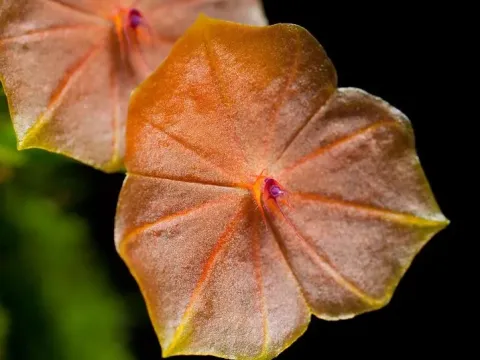
Lepanthes
Lepanthes
Lepanthes is a large genus of miniature epiphytic orchids belonging to the Orchidaceae family. Native to the tropical cloud forests of Mexico, Central America, and the Andes, these plants thrive in high-altitude environments where humidity is constant and temperatures remain cool.
What the section contains
 Lepanthes calodictyon
Lepanthes calodictyon
Lepanthes calodictyon
 Lepanthes caritensis
Lepanthes caritensis
Lepanthes caritensis
 Lepanthes dodiana
Lepanthes dodiana
Lepanthes dodiana
 Lepanthes eltoroensis
Lepanthes eltoroensis
Lepanthes eltoroensis
 Lepanthes rubripetala
Lepanthes rubripetala
Lepanthes rubripetala
 Lepanthes rupestris
Lepanthes rupestris
Lepanthes rupestris
 Lepanthes sanguinea
Lepanthes sanguinea
Lepanthes sanguinea
 Lepanthes selenitepala
Lepanthes selenitepala
Lepanthes selenitepala
 Lepanthes veleziana
Lepanthes veleziana
Lepanthes veleziana
 Lepanthes woodburyana
Lepanthes woodburyana
Lepanthes woodburyana
Lepanthes
Botanically, Lepanthes are characterized by their sympodial growth habit. Each leaf is supported by a thin stem known as a ramicaul. The flowers, while often minute, display complex structures and vibrant colors, making them highly prized by collectors of botanical orchids.
Successful cultivation requires a climate-controlled environment, such as an orchidarium, to replicate their natural cloud forest habitat. They require consistent day temperatures between 16°C and 22°C, and a significant drop in temperature during the night to promote healthy physiological activity.
High humidity levels (80% and above) are non-negotiable for Lepanthes. The plants should be mounted on cork bark or tree fern slabs covered with a thin layer of live sphagnum moss to retain moisture without allowing the roots to remain waterlogged for extended periods.
Light levels must be kept low and diffused. Strong or direct sunlight can cause rapid dehydration and scorching of the delicate foliage. Growers typically use filtered light or specialized LED lighting tuned to a cool spectrum to mimic the conditions under the forest canopy.
Pests such as spider mites and scale insects are the primary threats to Lepanthes collections. Due to the delicate nature of the plant, preventative measures and early detection are essential. Using neem oil or gentle insecticidal soap at diluted concentrations is standard practice.
Fungal pathogens often manifest as black or brown spots on the leaves, frequently triggered by high stagnant humidity and poor air circulation. Removing the affected tissue and applying a systemic fungicide is necessary to prevent the disease from spreading to the entire plant.
Root rot is a common issue caused by degraded media or over-watering. Because Lepanthes are epiphytes, their roots require excellent gas exchange. If the potting medium becomes too compact or decayed, the roots will suffocate, leading to the rapid decline of the specimen.
Bacterial soft rot can occur if water remains trapped in the center of new growth for too long. Ensuring that the leaves dry off within a few hours of watering is a key agricultural practice to maintain plant health and prevent opportunistic infections.
Nutrient deficiency or toxicity can also impact growth. Lepanthes are sensitive to high mineral salts in the water; therefore, utilizing reverse osmosis or rainwater with a very dilute orchid fertilizer is recommended to avoid chemical stress on the root system.