
Lepanthes woodburyana
Lepanthes woodburyana
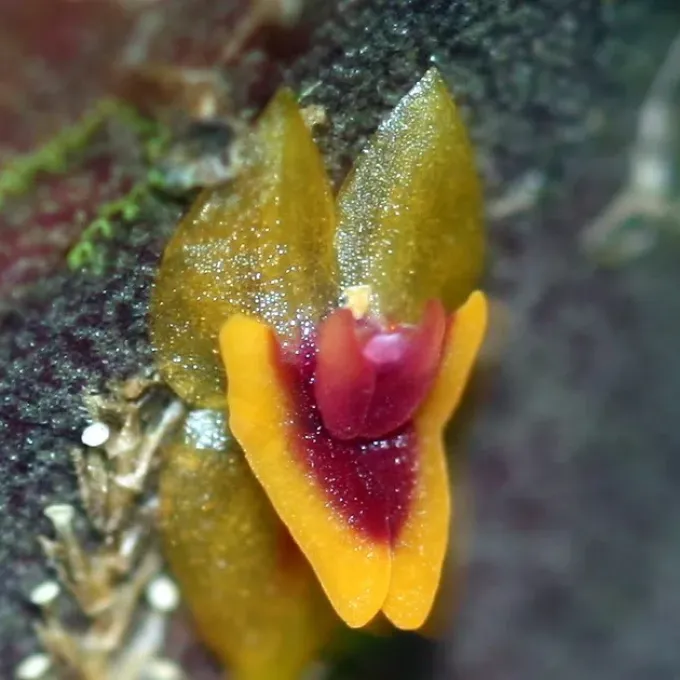
Description
Growing requirements
Lepanthes woodburyana is a miniature epiphytic orchid belonging to the Orchidaceae family. Native to the high-altitude cloud forests of Puerto Rico, it naturally grows on moss-covered tree branches, thriving in conditions of constant mist and high humidity.
To successfully cultivate this species, a cool to intermediate climate must be maintained. The temperature should ideally stay between 15°C and 22°C, as the plant is highly sensitive to heat stress and may perish in warmer environments.
Maintaining high relative humidity levels, typically between 70% and 90%, is essential for this orchid. As a mountain-dwelling species, it also requires excellent airflow to ensure that moisture does not stagnate, which prevents the development of diseases.
In cultivation, this plant is best grown mounted on cork bark or tree fern slabs, layered with a thin pad of living sphagnum moss. This mounting method mimics the natural habitat, allowing the roots to access both moisture and oxygen efficiently.
Light intensity for Lepanthes should be low to moderate, providing approximately 10,000 to 15,000 lux of diffused light. Direct sunlight must be avoided at all costs, as it will rapidly burn the delicate leaves and significantly weaken the plant's growth.
Main diseases and pests
The primary threats include fungal and bacterial rots resulting from poor ventilation and excessive surface moisture. Ensuring that the foliage dries out quickly after watering is key to preventing these infections.
Common insect pests include spider mites and scale insects. These organisms thrive in environments with low humidity, making regular monitoring and appropriate pest management protocols vital for maintaining healthy specimens.