
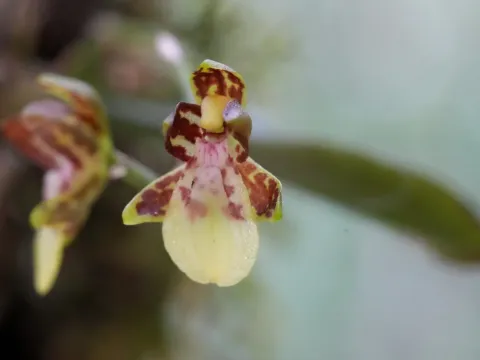
Leochilus
Leochilus
Leochilus is a genus of epiphytic orchids belonging to the Orchidaceae family. These plants are native to the tropical regions of Central and South America, where they thrive in humid and warm environments, typically attached to tree branches.
What the section contains

Leochilus
Successful cultivation requires high ambient humidity levels, generally around 60% to 70%. Good air circulation is essential for these plants to ensure that foliage dries off properly after watering, preventing the onset of bacterial infections.
Because Leochilus are epiphytes, the most suitable growing medium consists of bark mounts or very coarse orchid substrate. This allows for excellent drainage and ensures that roots have access to necessary oxygen levels throughout the growing cycle.
The plants prefer bright, indirect sunlight. Direct exposure to intense sun can cause significant leaf damage, while insufficient light levels will hinder the plant's ability to flower and weaken its overall physiological state.
Temperature management should focus on maintaining a moderate to warm climate, ideally between 22°C and 26°C during the day. A slight temperature drop at night is beneficial and helps mimic the natural cycles of their native habitat.
Fungal and bacterial rots are the most common threats to Leochilus, usually triggered by overwatering or stagnant air. These conditions lead to rapid tissue decay and can result in the loss of the plant if not addressed promptly.
Pests such as spider mites and mealybugs can pose a serious threat, especially in low-humidity environments. These insects hide in the tight spaces of the leaves and pseudobulbs, making them difficult to detect until an infestation is established.
Effective management includes regular monitoring of the plants and the application of appropriate acaricides or insecticides. Cleanliness of the growing area and sterilized tools are critical to preventing the spread of diseases between plants.
Maintaining a balanced nutritional regime is vital; however, over-fertilization should be avoided. Excess nitrogen can lead to soft growth that is more susceptible to both insect pests and fungal pathogens, reducing the plant's resilience.
If rot is detected, immediate action must be taken by cutting away infected tissues with a sterile blade and treating the wounds with a fungicide. Promoting quick drying of the foliage is a key preventive measure against recurrent infections.