
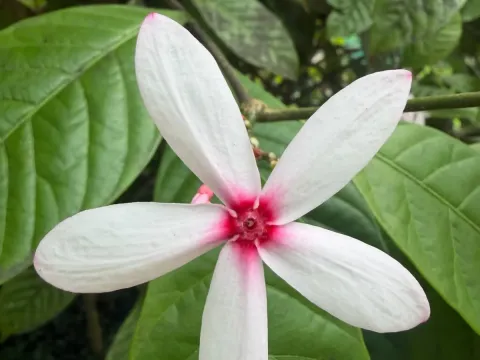
Kopsia
Kopsia
Kopsia is a genus of evergreen shrubs or small trees belonging to the Apocynaceae family. In their natural habitat, these plants are native to the tropical regions of Southeast Asia, spanning areas from Southern China to Indonesia and the Philippines.
What the section contains


Kopsia
Successful cultivation of this crop requires a consistently warm tropical climate without sharp temperature fluctuations. The plant is extremely sensitive to cold and cannot tolerate even brief frosts, which limits its outdoor cultivation to strictly tropical and subtropical zones.
Soil requirements include a fertile, well-drained substrate with a neutral to slightly acidic pH. Waterlogging is fatal to Kopsia roots, so it is essential to ensure a high-quality drainage layer when planting in a pit or a container.
The plant prefers bright, filtered light protected from direct afternoon sun; however, in low-light conditions, it becomes leggy, losing its aesthetic shape. The intensity of flowering is directly dependent on light quality and consistent watering.
Economically, Kopsia is grown primarily as an ornamental crop for parks and private gardens. Due to its beautiful tubular flowers, which resemble those of the Catharanthus, it is highly valued in landscape design as a stunning specimen or an accent plant in mixed borders.
Typical issues encountered in Kopsia cultivation include fungal infections triggered by improper humidity or moisture levels in the soil. Leaves may be affected by powdery mildew or various leaf spots, which require treatment with broad-spectrum fungicides.
In greenhouse or indoor conditions, the crop is frequently attacked by pests such as spider mites, scale insects, and mealybugs. These pests multiply rapidly in dry air, making regular misting of the crown an essential preventative measure.
Systemic insecticides are recommended for pest control; however, if the infestation is severe, sanitary pruning of affected branches should be performed. Monitoring the plant at early stages is crucial, as many pests hide on the undersides of the leaves.
Beyond biological threats, the plant may suffer from chlorosis caused by micronutrient deficiencies or an improper soil pH level. Prompt application of complex fertilizers containing iron and magnesium chelates helps resolve the issue and restores the vibrant green color to the foliage.
Maintenance and agrotechnics for Kopsia also include regular pruning, which not only shapes the crown but also removes older, weakened branches where pests and infection foci tend to concentrate.