
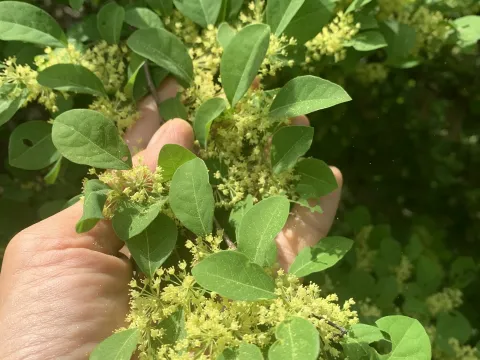
Flueggea
Flueggea
Flueggea is a genus of deciduous shrubs and trees belonging to the Euphorbiaceae (spurge) family. Among the species, Flueggea suffruticosa is the most economically significant, primarily utilized in the pharmaceutical industry for its alkaloid content, specifically securinine.
What the section contains


Flueggea
Originating from East Asia, including China, Japan, and the Russian Far East, this plant naturally thrives in diverse habitats such as forest margins, river valleys, and stony slopes. This evolutionary background makes the plant highly adaptable to various environmental conditions.
The crop thrives best in well-drained, fertile loam soils with a neutral or slightly acidic pH. Proper soil drainage is the most critical factor for success, as the root system of Flueggea is highly susceptible to rot caused by waterlogging or poor soil aeration.
Regarding climate, the plant exhibits good cold hardiness, allowing it to survive in temperate zones. However, young specimens benefit from shelter during extreme winter conditions or late spring frosts, which can damage the tender buds and significantly reduce the potential growth for the season.
Agronomic management requires consistent moisture control during the growing season. While mature plants show reasonable drought tolerance, maintaining moderate soil moisture levels ensures vigorous growth and consistent development of the specialized chemical compounds required for industrial processing.
The primary economic use of Flueggea is the harvesting of its aerial parts, specifically leaves and young shoots, which are processed to extract securinine. This compound is valued for its pharmacological properties, particularly in treating nervous system disorders and muscle-related conditions.
Yields are optimized through strategic planting density and a balanced fertilization program. Nitrogen and potassium applications are essential during the active vegetative phase to promote rapid biomass production and ensure the density of the canopy remains optimal for harvesting.
Harvesting should be timed precisely with the flowering stage, as this is when the concentration of medicinal alkaloids reaches its peak. Cutting the shoots too early or too late can significantly reduce the quality and potency of the final medicinal extract produced from the harvest.
Post-harvest processing is critical for maintaining quality. The material must be dried immediately in well-ventilated, shaded areas or industrial drying units at controlled temperatures, typically not exceeding 50 degrees Celsius, to prevent the chemical breakdown of the active ingredients.
A well-managed Flueggea plantation typically remains productive for 5 to 7 years. After this period, the biomass production often declines, and soil nutrients may become depleted, necessitating a crop rotation plan to restore soil health and prepare for replanting elsewhere.
The most significant threat to Flueggea is root rot, particularly in heavy or poorly drained soils. Farmers must prioritize site selection and soil preparation to prevent the standing water that encourages fungal pathogens to compromise the plant's root system.
Leaf-eating insects can pose a challenge, especially in warm, dry weather conditions that favor pest multiplication. Regular field scouting is necessary to detect infestations early, allowing for timely intervention before the pest population causes significant defoliation.
Powdery mildew is a common concern in dense plantings where airflow is restricted. Pruning practices that improve air circulation within the shrub canopy are highly effective as a preventative measure, reducing the need for chemical fungicide intervention in the field.
Sanitation is key to disease prevention. Removing and destroying infected plant debris helps break the lifecycle of many pathogens that affect Euphorbiaceae species. Always dispose of infected material away from the main production area to prevent re-infection.
Biological controls and organic pest management strategies are preferred, given the crop's use in medicine. Maintaining high soil organic matter and encouraging beneficial insects can create a balanced ecosystem that helps the Flueggea shrubs resist environmental stress and pathogenic attack.