
Flueggea suffruticosa
Flueggea suffruticosa
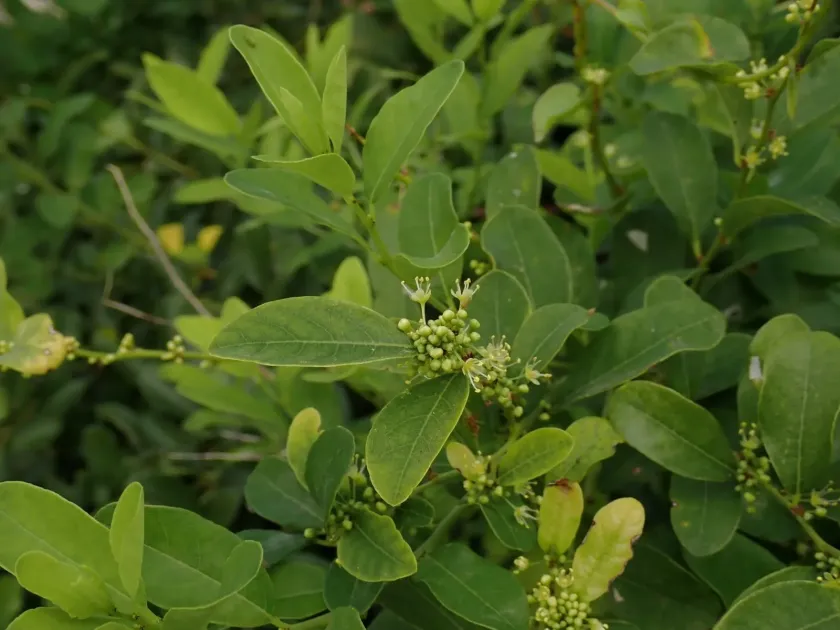
Description
Sowing dates
Seeds require a period of cold stratification to break dormancy. Sowing is typically performed in prepared nursery beds during the early spring, ensuring the soil remains moist until germination occurs.
Growing requirements
Flueggea suffruticosa, a member of the Phyllanthaceae family, is a deciduous shrub that serves as an important source of medicinal alkaloids. It typically develops a multi-stemmed structure with numerous slender branches.
The species is native to East Asia, spanning regions from Russia’s Far East to China and Japan. It thrives in temperate environments, typically occupying riverbanks, open woodlands, and rocky slopes where drainage is optimal.
Regarding site requirements, the plant prefers well-drained, fertile soil with a slightly acidic to neutral pH. It is a heliophilous plant, meaning it demands ample sunlight to maintain vigorous growth and achieve high concentrations of active biochemical compounds.
Agronomic management requires consistent weed control and occasional pruning to manage the bush density. Fertilization should be balanced, focusing on nitrogen-rich amendments early in the season to encourage the development of the vegetative biomass used for extraction.
The primary economic application of this crop is pharmacological. The plant is industrially cultivated for the synthesis of securinine, a central nervous system stimulant used in clinical practice to treat conditions associated with muscle weakness and fatigue.
Main diseases and pests
Disease pressure usually involves fungal leaf spots and root rots caused by waterlogged soil conditions. Integrated pest management (IPM) strategies, including biological control agents, are recommended to manage occasional infestations of aphids and mites.
Harvesting
Harvesting is restricted to the annual green shoots and leaves, which are clipped during the peak blooming period. Immediate processing, including mechanical drying in controlled conditions, is critical to preserve the integrity of the secondary metabolites.