
Flueggea neowawraea
Flueggea neowawraea
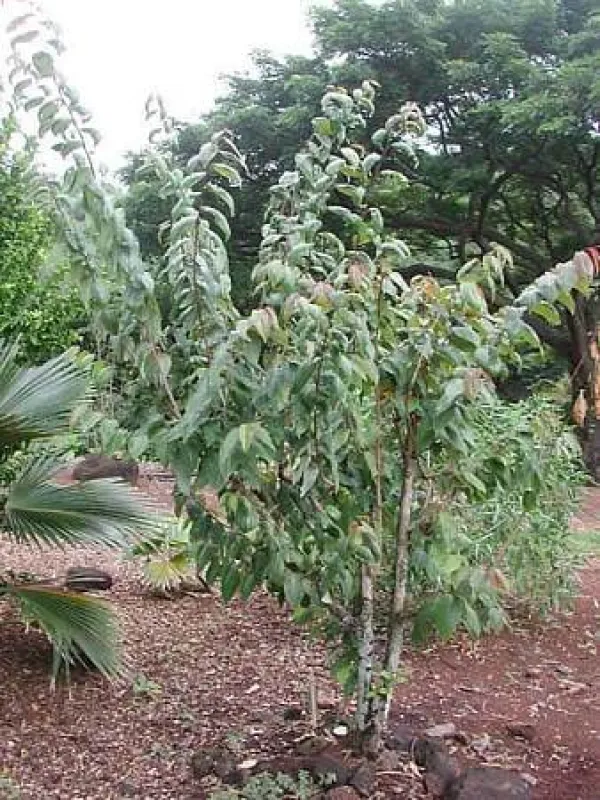
Description
Growing requirements
Flueggea neowawraea is a large tree species belonging to the Euphorbiaceae family. Native to the Hawaiian Islands, it is primarily found in the dry and mesic forests, displaying remarkable resilience to arid conditions characteristic of volcanic environments.
The species requires well-drained, nutrient-rich soil to thrive. While it is naturally adapted to the specific climate of Hawaii, its growth is optimal in areas with moderate rainfall and full sun exposure, ensuring the development of its dense and hardwood structure.
Botanically, the tree is dioecious, meaning it bears separate male and female flowers on different individuals. This trait necessitates careful management in propagation efforts to ensure successful pollination and seed production for conservation purposes.
Throughout its development, Flueggea neowawraea requires a consistent growth environment. In managed nursery settings, maintaining soil fertility and moisture levels is essential for young saplings, as they are more vulnerable to environmental stress than mature trees.
Historically, this plant was highly regarded for its wood, which is known for its incredible hardness and density. This led to its widespread traditional use in building essential tools and durable infrastructure before its status became threatened.
Main diseases and pests
The most significant threat to the survival of Flueggea neowawraea is the infestation of the ambrosia beetle (Austroplatypus incompertus). This insect bores into the wood, causing catastrophic damage and eventual tree death.
Invasive ungulates, such as goats and pigs, pose a severe risk to the species by feeding on bark and young seedlings. This feeding behavior effectively prevents natural regeneration in the wild, leading to aging populations without replacements.
Disease outbreaks, often secondary to insect damage, can rapidly spread through a stand of trees. The weakened state of infested trees makes them susceptible to various opportunistic fungi that further compromise the internal structure of the trunk.
Competition from invasive plant species is another critical issue. These aggressive plants crowd out native species, depriving Flueggea neowawraea seedlings of necessary light, water, and soil nutrients required for survival.
Ongoing conservation strategies involve strict habitat protection and the establishment of ex-situ germplasm banks. Integrated pest management and the construction of protective fences around sensitive areas remain the primary methods to mitigate these threats.